

In a world dominated by speed, scale, and efficiency, a new question is becoming louder: Do we know where we’re going?
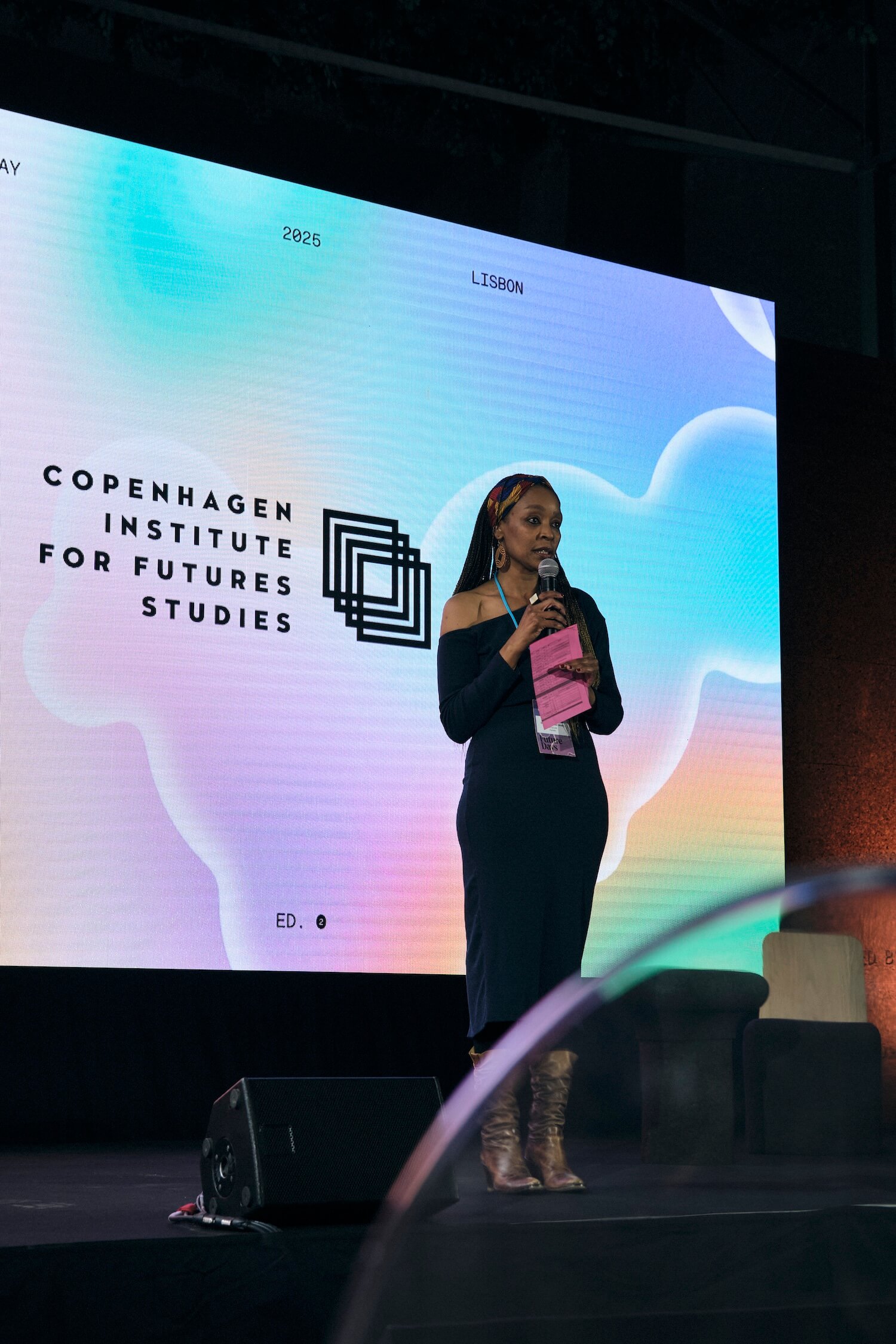
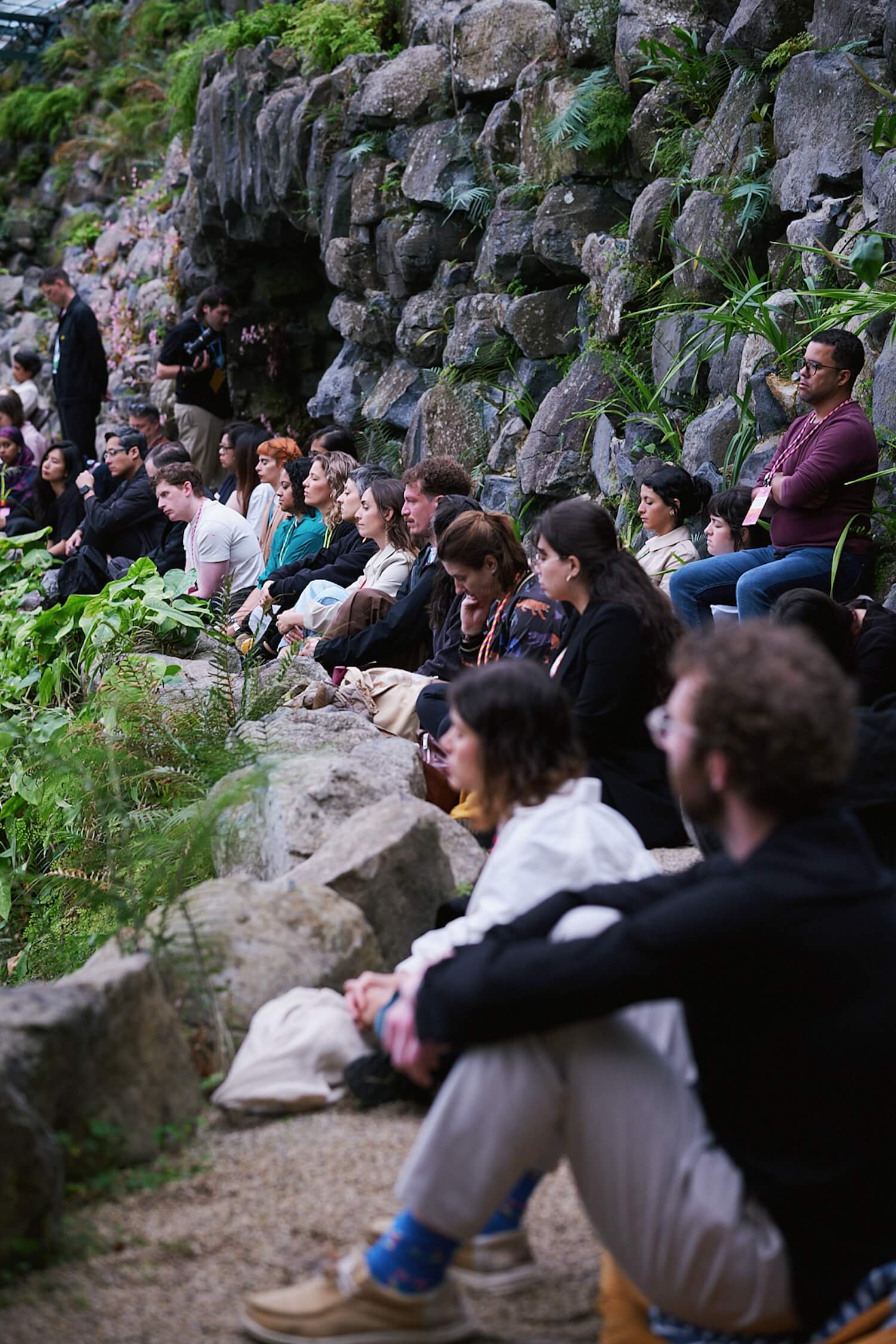
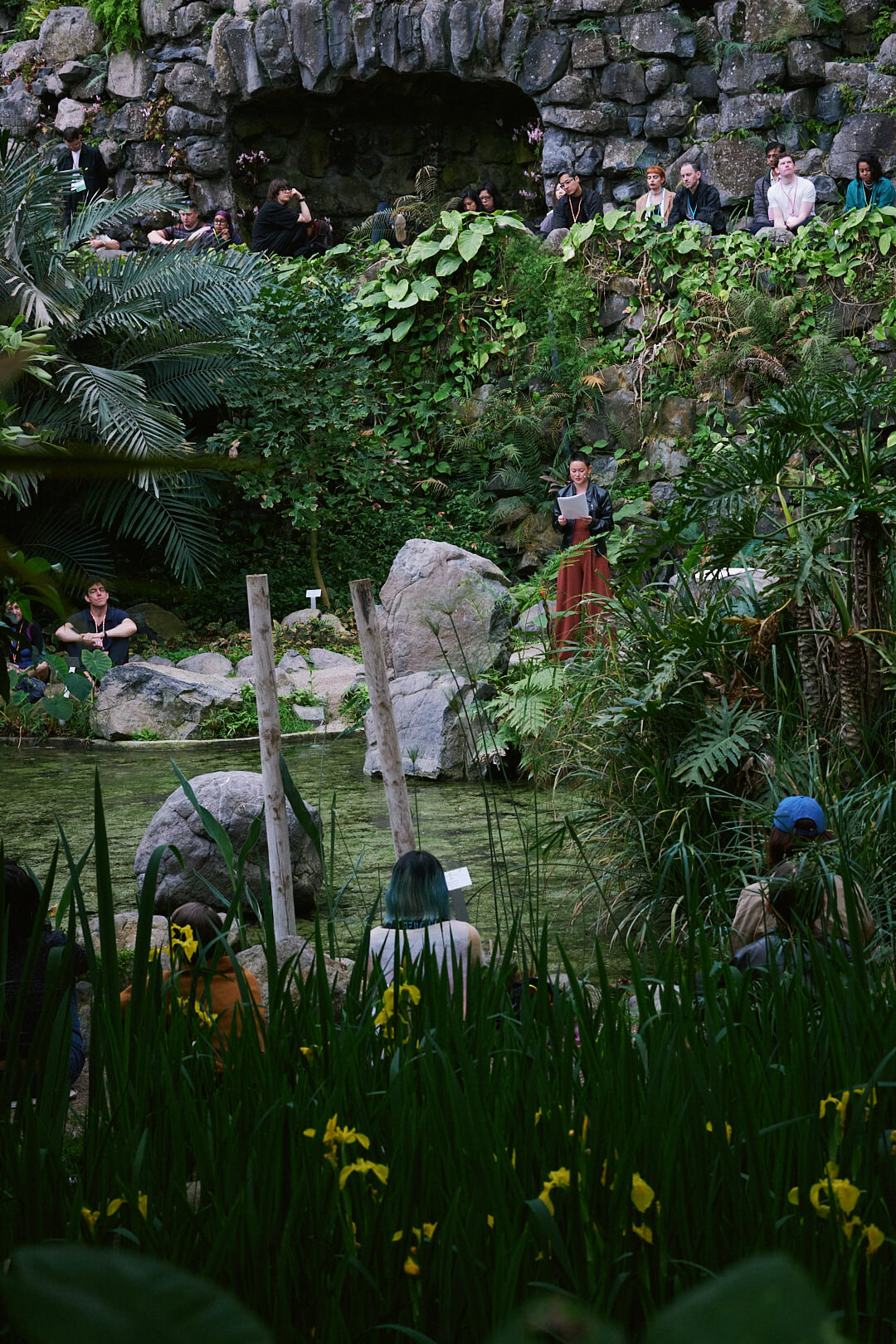
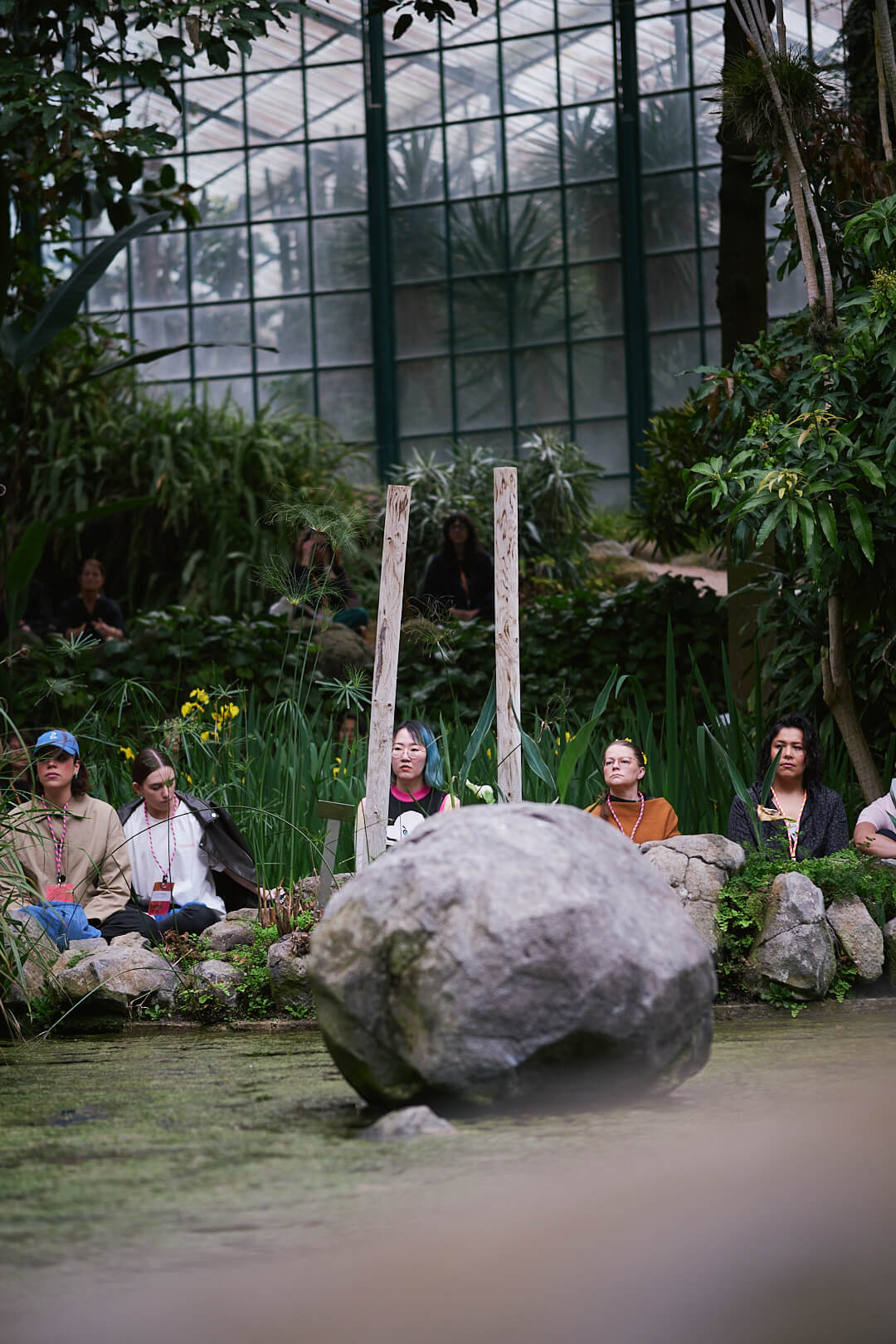
Future Days 2025 didn’t try to give one clear answer. Instead, it offered intellectual and physical space for deeper reflection. The venue itself, Estufa Fria, a tropical garden hidden in the heart of Lisbon, reminded participants that the future isn’t just digital. Its humid air, birdsong, and lush greenery intertwined with glass and wood offered a living symbol of interconnected systems.
This meeting of leading thinkers and doers – futurists, designers, policymakers, and innovators – revolved around one key theme: “Towards Symbiotic Futures.” Rather than promoting another round of “tech futures,” the conference challenged us to change our perspective: how do we design a world where technology, ecosystems, and societies co-exist rather than compete? Symbiosis wasn’t used as a metaphor but proposed as a real model for development – systemic, decolonising, and more-than-human.
Symbiosis as a New Innovation Paradigm
The conference began with a bold statement – a redefinition of innovation itself. “Symbiotic Futures” wasn’t just a catchy phrase but a call to shift focus from efficiency to interdependence, from competitive advantage to sustainable impact. The setting played a significant role. Estufa Fria was more than decoration – it was a manifesto. Surrounded by water vapour, cork, leaves, and glass, participants experienced what it means to function as a diverse, cooperative, and adaptive system.
It requires a shift in thinking – from linear logic to ecosystem logic. Practically, innovation will no longer come only from corporations or startups. It will be increasingly co-created with local communities, for diverse users, and with the interests of all stakeholders, including nature, future generations, and often-overlooked social groups.
Three Micro-Worlds of Future Days That Stayed With Us
Future Days made its mark with big ideas and tangible intellectual and institutional experiments that could genuinely shape future development. Among many sessions, three thematic spaces stood out – possibly because they addressed burning questions like: How do we live together? Who takes part in system design? And can we change institutions rather than criticise them?
- UN Future Lab explored crisis-resilient cities—both environmentally, socially, and culturally. The real innovation was the method: Teams combined Western and Global South perspectives, focusing not on tech demos but on co-designing inclusive urban models for the future.
- EU Innovation Lab raised a timely and challenging question: Should nature and animals have legal representation in legislative processes? A growing theme in EU strategy circles, this opens the door to redefining the term stakeholder in public, urban, and even corporate projects.
- The third – and perhaps most surprising – theme came from the UK Ministry of Justice. It asked: What should prisons of the future look like? The answer wasn’t isolation but reintegration – spaces for rebuilding social connections. Radical? Maybe. But if innovation is meant to improve life, we can’t ignore those on the margins.
AI and the Poland–World Narrative Gap
AI was also a significant topic, but it was not discussed in terms of hype or fear. What stood out was the contrast in tone and maturity between global conversations and how AI is discussed in Poland.
In Lisbon, the language was full of possibilities: AI as a tool to improve inclusion, public services, and responsible knowledge management. Less fear, more competence. Fewer “Will AI replace us?” questions, more “For whom – and how – can AI work best?”
The role of AI in the Global South was especially powerful. Participants saw it as a chance to close structural gaps in education, healthcare, and access. Rather than worrying about automation risks, participants asked how to ensure these tools support equal opportunities and avoid repeating the mistakes of data colonialism.
This was not a naïve conversation – the risks were well understood. But what set it apart was the ability to place AI in a real-world social context. AI was treated not as a fascination, but as a tool for designing systemic solutions, not just new products.
At Booster of Innovation™, we believe that technology is neither good nor bad in itself – it depends on how we embed it in systems. That’s why we pay close attention to global debates – not to copy them, but to translate their meaning into local action. Tension between perspectives can be uncomfortable, but it’s often where the most critical progress happens.
Provocation as a Tool for Strategic Thinking
In a world full of data and lacking attention, one of the most powerful ways to spark deep thinking is not to give an answer, but to ask a question that sticks.
At Future Days, such questions were deliberately asked—not on stage but in informal discussions, working groups, and exchanges between participants. Their purpose was not comfort; it was disruption.
One particularly sharp provocation was:
Is the innovation community treating “symbiosis” as a guaranteed win?
In other words, are we fooling ourselves with the idea of harmony, while ignoring real ecological, technological, and socio-economic tensions?
True symbiotic systems – those that survive over time – involve friction, renegotiation, and functional imbalance. Stability doesn’t come from the absence of conflict, but from its constructive presence.
This way of thinking echoes our approach at Booster of Innovation™: if you want to create something new, start by challenging what seems obvious. For us, provocation is not controversy for its own sake—it’s a tool for breaking free of yesterday’s patterns because real innovation begins where comfort ends.
Questions That Disrupt Auto-Pilot Thinking
One of the most valuable aspects of Future Days was not the presentations but the questions that emerged in the spaces between them.
They acted like intellectual “keys”—unlocking new ways of seeing and shaking people out of mental routines.
Take this one:
Do we assume “symbiosis” is natural and easy?
The question disrupted the idea that harmony is effortless. In nature, cooperation often depends on tension, balanced interests, and readiness to adapt. Thinking about the future as a dynamic system – not an ideal – is much closer to the challenges leaders face today.
At Booster of Innovation™, we use provocative questions in our strategic work. They help clients step outside the safety of “we’ve always done it this way” and open the door to truly new ideas—not just better versions of old ones.
Sometimes, a single well-placed doubt helps a client see their business, product, or market from an entirely new angle. That’s where fundamental transformation begins.

What’s Next: Topics That Will Soon Become Critical
Future Days didn’t offer ready-made answers – but it did sketch out tensions that leaders should explore now, before they become urgent.
Key emerging themes include:
- Nature as a decision-making participant – not just environmental protection, but legal and design inclusion of rivers, forests, and species. This challenges how we define stakeholders and make organisational decisions.
- Decolonising technology – moving beyond equal access to redefining who creates, for whom, and based on which values. A Silicon Valley-only narrative for AI is no longer enough. We need local, context-aware technologies.
- Designing systems for friction and renegotiation: Future–proof strategies must accept tension and disagreement as normal, even stabilising forces.
- “Unthinkable futures” – the skill of designing for futures we can’t yet imagine. This is less about data and more about navigating the unknown with courage, humility, and new tools.
- Acting beyond ROI – in a data-saturated world, imagination and curiosity are in short supply. We’re hearing a new call: Stop asking what works – start asking what matters.
- Ambition beyond self-interest – not quarterly growth, but the ability to design for a world that will exist after us. The question “Are we ambitious enough?” is becoming a new benchmark for strategy.
At Booster of Innovation™, we are already translating these questions into decisions—strategic, product-related, and organisational—not to stay trendy but to build resilient growth paths before the future becomes the present.
Feet on the Ground, Eyes on the Future
Talking about the future can sometimes feel disconnected from reality. It’s easy to get lost in inspiring ideas that are hard to implement. But authentic leadership-in companies, cities, and ecosystems-is not about dreaming up new worlds. It’s about building bridges between what is possible and what is real.
That’s why at Booster of Innovation™, we see speculative thinking not as a goal, but as a tool. It helps uncover the invisible, challenge assumptions, and open new options. But the real value comes when those ideas become action – new services, systems, or strategies.
In our experience, this mix of bold imagination and disciplined execution truly builds competitive advantage today. Futures are not shaped on stage. They are shaped in everyday actions, grounded in purpose, and tested by reality.
Future Days Resonated with Our Work
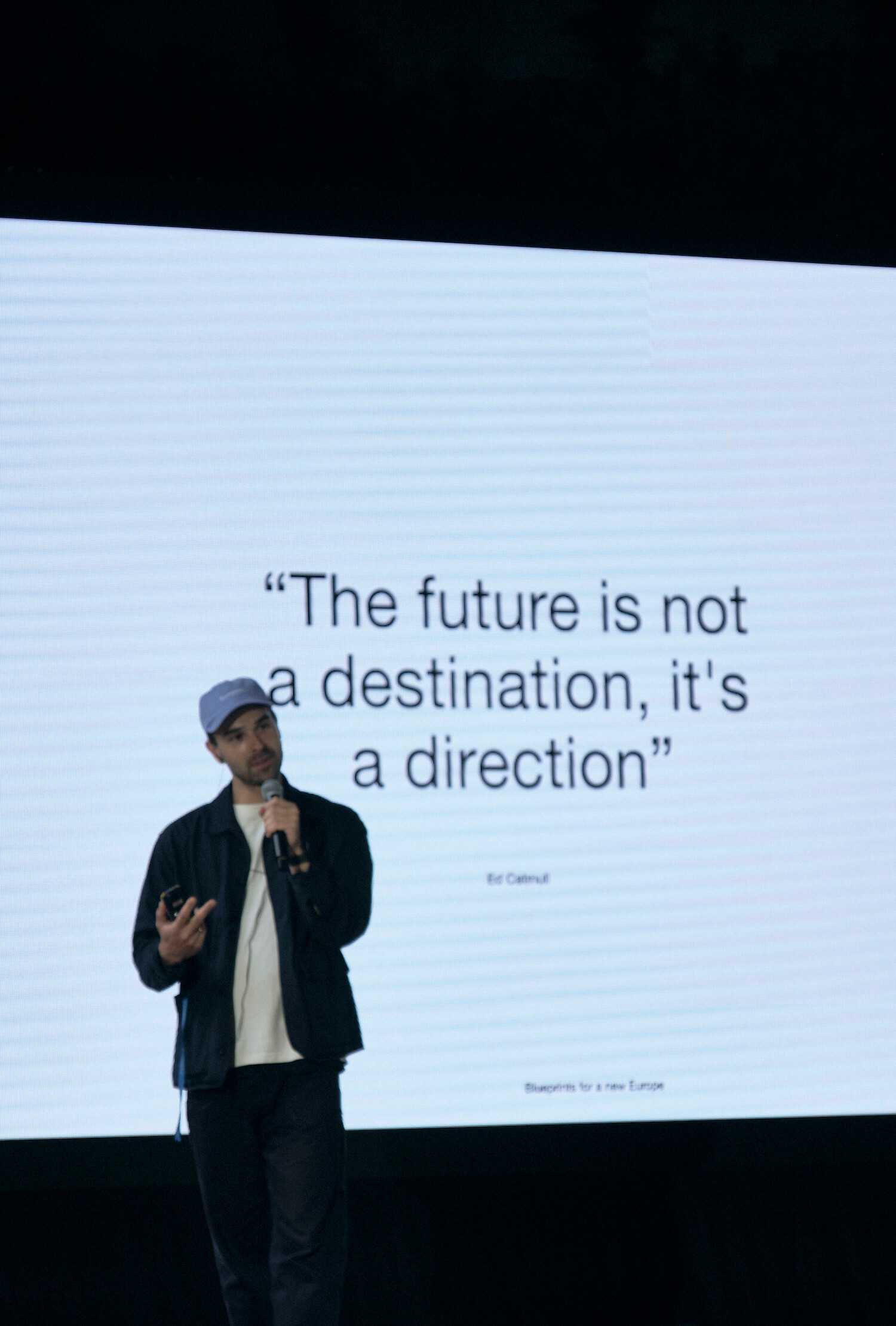
Future Days was more than just an event – it was a mirror. It confirmed that the direction we’ve been pursuing at Booster of Innovation™ is not only aligned with global trends – in many ways, it’s ahead of them.
We don’t work in a vacuum. We operate at the intersection of technology, society, and environment. More often, our clients tell us: We need a partner who understands complexity and isn’t afraid to ask the hard questions.
The dialogues we had with UN officials, grassroots activists, policymakers, and designers gave us not just inspiration but practical input. Questions about technology, nature, and justice filtered through our everyday work: shaping strategies, designing products, and building policies.
Because that’s where we’re strongest – in translating bold ideas into action.
No Sugar-Coated Futures
We don’t want utopias. We want livable futures that don’t avoid complexity, smooth over tensions, or promise easy fixes.
That’s why events like Future Days are so important. Not because they give answers – but because they ask the questions we often don’t ask ourselves.
At Booster of Innovation™, those questions are our most valuable asset. They are the starting point for solutions that are modern and responsible, systemic and grounded, and created with real people in mind—today, tomorrow, and five years from now.
If you’re looking for a space to explore a future that has yet to be built, let’s talk.
The best projects begin with brave conversations.





0 Comments