

Last week, at the invitation of TVP WORLD, I had the pleasure of taking part in a classic Oxford-style debate. The topic was one of the most burning issues for executive boards and the future of our civilisation: “AI is destroying human civilisation!”
Interestingly, in this debate, I took on a rather unusual role for me: together with Max Dropinski, I argued for the motion.
Our goal was not to demonise a technology I have successfully implemented in business for years, but to prompt the audience to think critically and maintain a healthy distance. That goal was achieved. Before the debate, only 28% of viewers supported the motion. After the discussion, the results flipped: 54% voted for it – almost a 100% increase in support.
This spectacular result is proof that we are standing at a strategic crossroads between “the extraordinary promise and the profound risk of AI.” What convinced the audience to change their mind – and how does this conclusion translate into strategic innovation in your company?
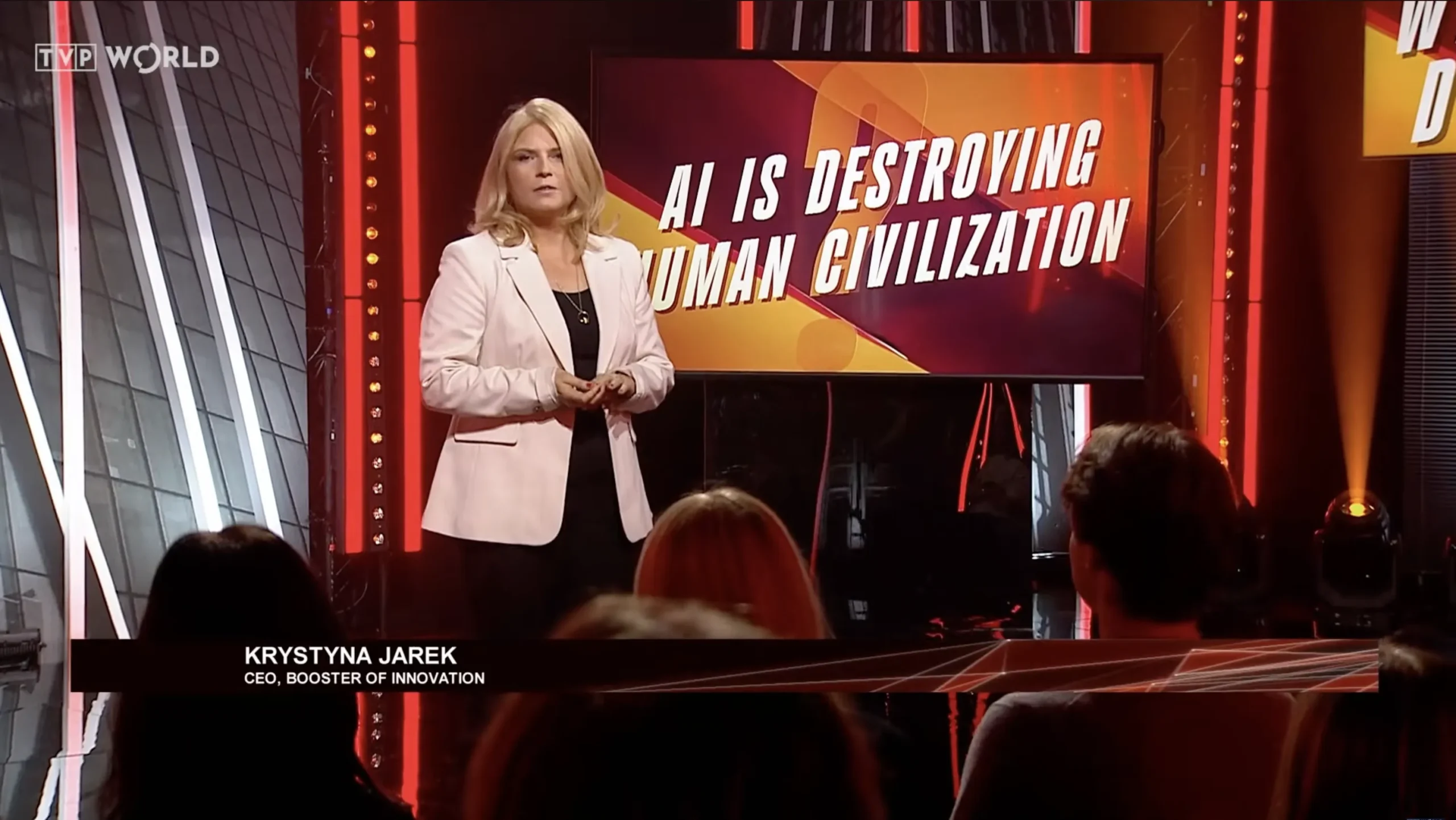
A spark that could end it all
The debate focused on a technology described either as “the greatest leap forward in human history” or “the spark that might end everything.”
Alongside Max Dropinski and me, the debate featured excellent panellists, including Prof. Łukasz Kołtowski and Michał Jaworski. My thanks also go to Dr Małgorzata Bonikowska and journalist Grzegorz Nawrocki for moderating the discussion and asking questions that demanded deep reflection.
Why a leader must be a sceptic: the hidden cost of delegation
As a strategic advisor, when working with leaders, I always stress that leadership in the age of AI requires duality: being both a supporter and a sceptic of technology. Only then can we make responsible decisions in a world no one has experienced before.
My line of argument in the debate focused not so much on the direct, destructive power of AI, but on the slow erosion of our human essence. We, humans, contribute to our own degradation when we delegate too much to algorithms.
- Cognitive depth
There is a hidden cost to every prompt we type into AI. AI stops us from thinking deeply; the machine begins to feel for us rather than with us. Reliance on AI undermines our critical thinking and decision-making, leading to cognitive depth. In short: the less we think, the less we’ll be able to.
- No new leaders
The obsession with automation and efficiency reduces the number of entry-level jobs. This deprives society of the training ground needed to develop tomorrow’s seasoned leaders.
- Risk of control and inequality
If we do not take deliberate action, technology and AI may end up in the hands of a small group that controls them, fuelling further inequality.
As I put it in the debate: the “destruction” lies in losing the very traits that make us human – our ability to think, feel and understand. AI is not wiping us out through a grand revolution, but through gradual erosion.
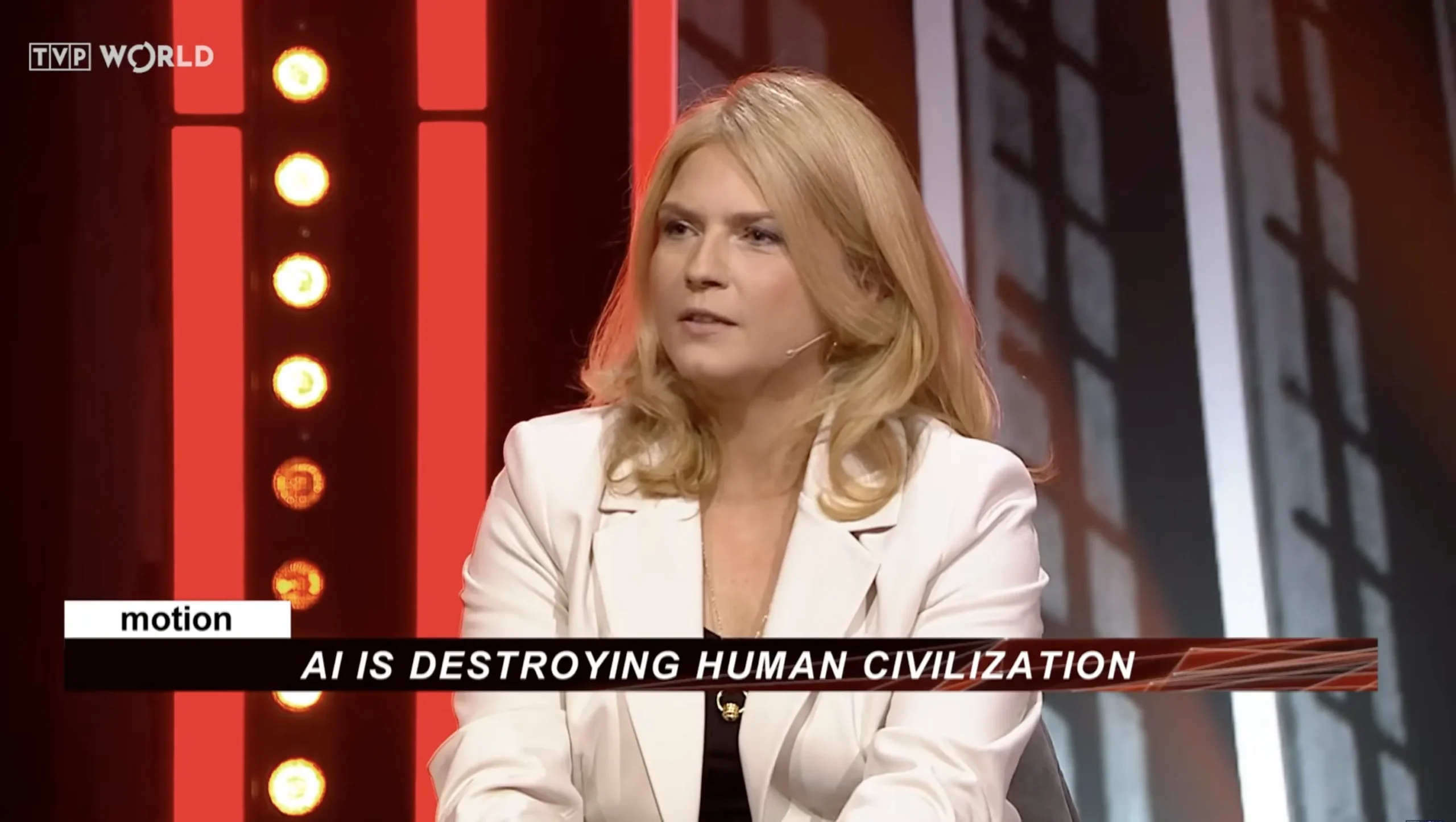
Why a leader must be a supporter: Homo sapiens plus
At the same time, as an advocate of AI and someone deeply involved in projects that demonstrate how AI can exceed human capabilities in solving social problems and creating real value in business, I absolutely believe in this technology’s potential.
The opposing side in our TV debate highlighted AI’s positive power:
- A revolution in medicine and healthcare
AI is the best, cheapest and fastest way to discover new proteins and therapeutic molecules that can save lives. It helps doctors diagnose diseases faster and accelerates drug discovery. Moreover, AI enables every GP to provide a level of care previously reserved for research centres, which is crucial for both training new doctors and caring for an ageing population.
- Democratisation of knowledge and creativity
AI is a highly democratic tool, available to almost everyone. It enables people to write code (e.g. in Python) and boosts creativity in areas where they are not experts (for instance, drawing or design). In the past, access to high-quality knowledge required years of study; today, it is available on demand.
- Increased productivity and more free time
AI can trigger a global productivity boom and allow people to focus on more creative and meaningful work. It can give us more time to look after ourselves (e.g., exercise and healthy eating) and pursue goals beyond work.
- Tackling global challenges
Used wisely, AI can be a force for good. It helps diagnose diseases, supports scientific research, improves energy efficiency, reduces food waste and helps predict natural disasters.
As the AGAINST side summarised:
“This is not killing our civilisation; it’s taking it to a new level.”
The key, however, is control and wise use. In this light, we must adopt a strategy of co-operation:
“If we cannot stop something, we have to join it – and we have to befriend it.”
We should aim for the concept of Homo Sapiens Plus – people who achieve better outcomes through collaboration with technology.
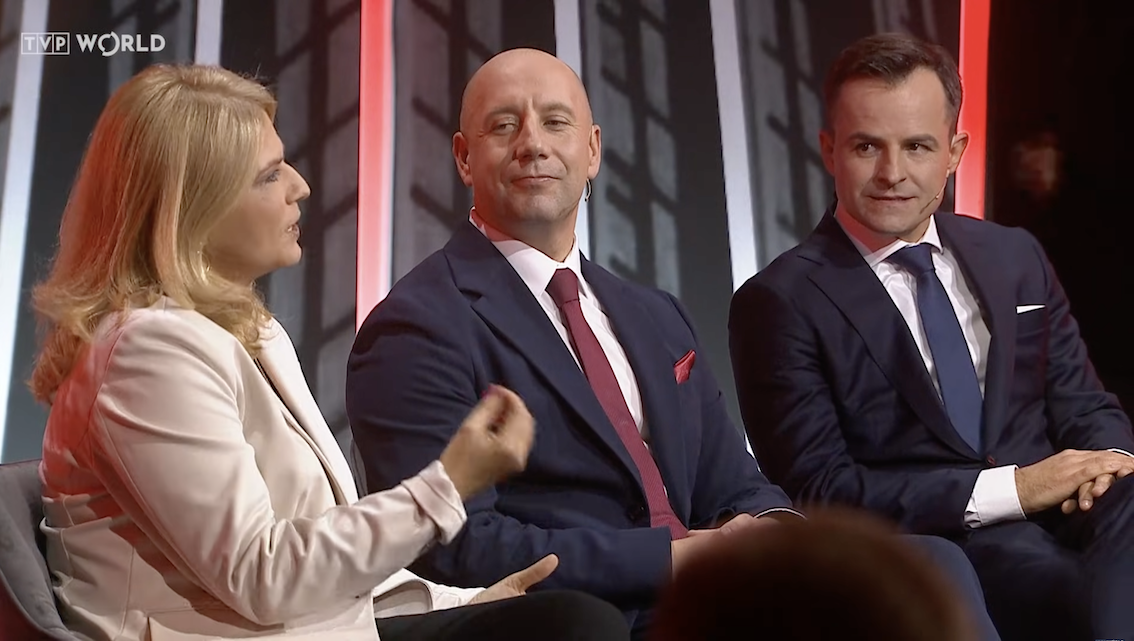
The wisdom of Prof. Rafał Ohme
A powerful voice in our debate was Prof. Rafał Ohme, who underlined the crucial role of human competences, especially emotional intelligence.
His central thesis was alarming: AI is getting smarter, while people are getting less intelligent, because we no longer use our brains as effectively as we did two decades ago. We do not train basic analytics (we have calculators), orientation (we have Google Maps) or memory (we have apps for everything).
His strategic advice for leaders – and for each of us – was:
“Forget about AI. Think about your brain. Start training your brain.”
His “brain gym” consists of three fundamental but straightforward exercises:
- Reading and writing. Forget memes and bite-sized news. Read articles and books to practise advanced analysis. Write memories, reflections, journals.
- Imagination. Don’t use ChatGPT to ask what you should do in the evening. Create your own ideas. Build your own imagination.
- Oxytocin – the magic medicine. The final and most important piece of advice concerned oxytocin – the hormone released when we meet other people face to face. Oxytocin increases the computing power of the prefrontal cortex (our central “processor”). Therefore: “Go out and meet your friends.”
Prof. Ohme explained that AI will never be able to experience emotions or have emotional intelligence because it is based on binary code. This is the one thing AI will never possess. Therefore, our following strategic recommendation is to train your emotional intelligence.
The choice is ours
The ultimate conclusion from the debate is clear:
“I genuinely believe that AI can do both – it can accelerate human potential and it can accelerate humanity’s downfall.”
Whether AI saves us or destroys us is not a matter of fate, but of the choices we are making right now.
“It’s all on us to decide. We are not doomed to any one scenario. It is in our hands to steer where AI and the technologies of the future will lead us.”
The key lies in caution and in combining technological progress with ethical responsibility. It is precisely in this strategic balance – in the ability to be both an advocate and a sceptic – that the future competitive advantage of every company lies.
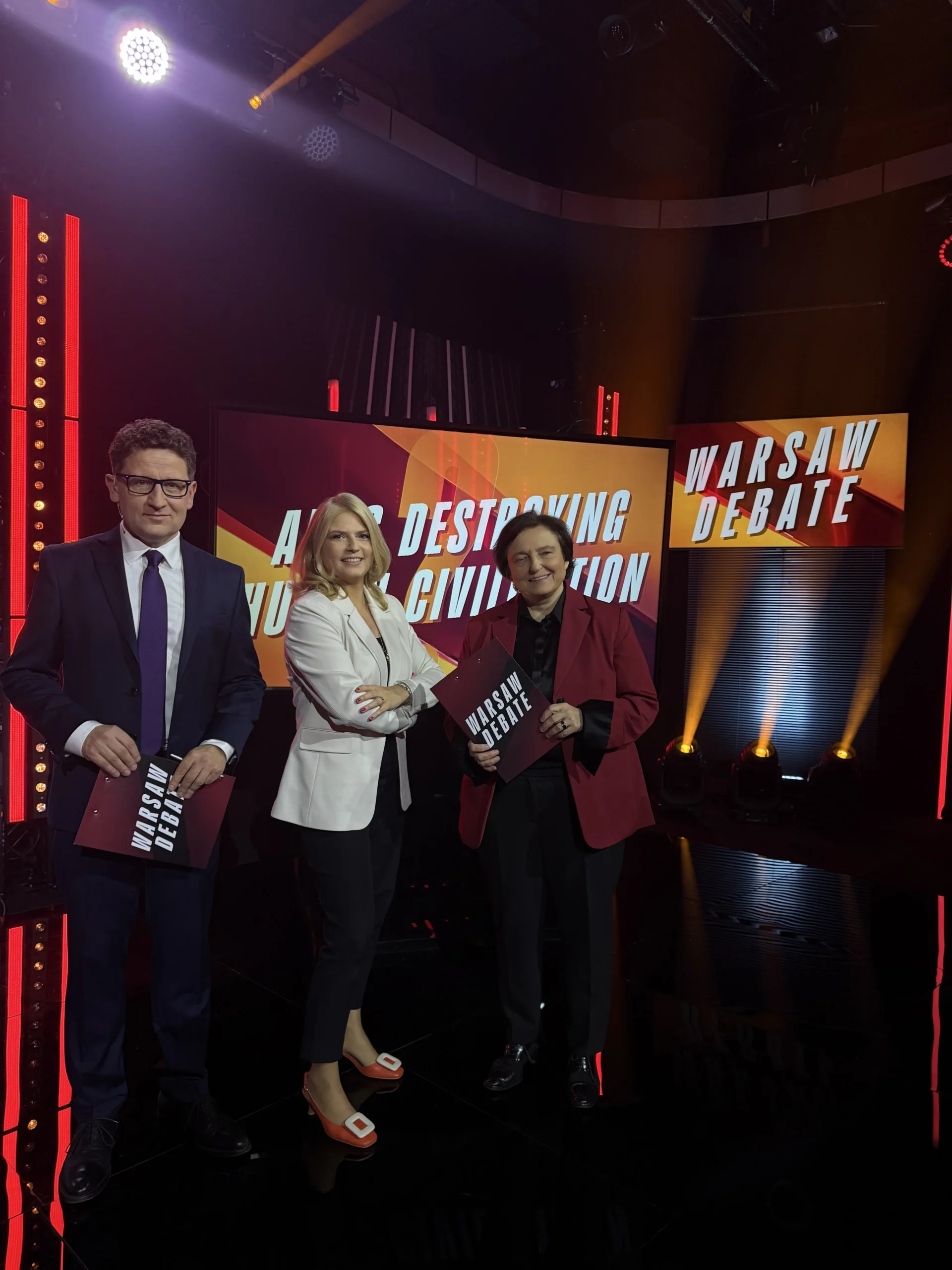
Watch and decide
If you would like to see how this line of argument developed in the heat of debate – and how it changed public opinion – I invite you to watch the recording:
▶️ Watch the full Oxford debate on AI on TVP WORLD:
And then let me know in the comments: Are you FOR or AGAINST the motion that AI is destroying human civilisation?

0 Comments