

Findings from the OVHcloud & PMR study: “AI in the Large and Medium-Sized Company Sector in Poland”
Polish business has a complicated relationship with artificial intelligence—full of paradoxes.
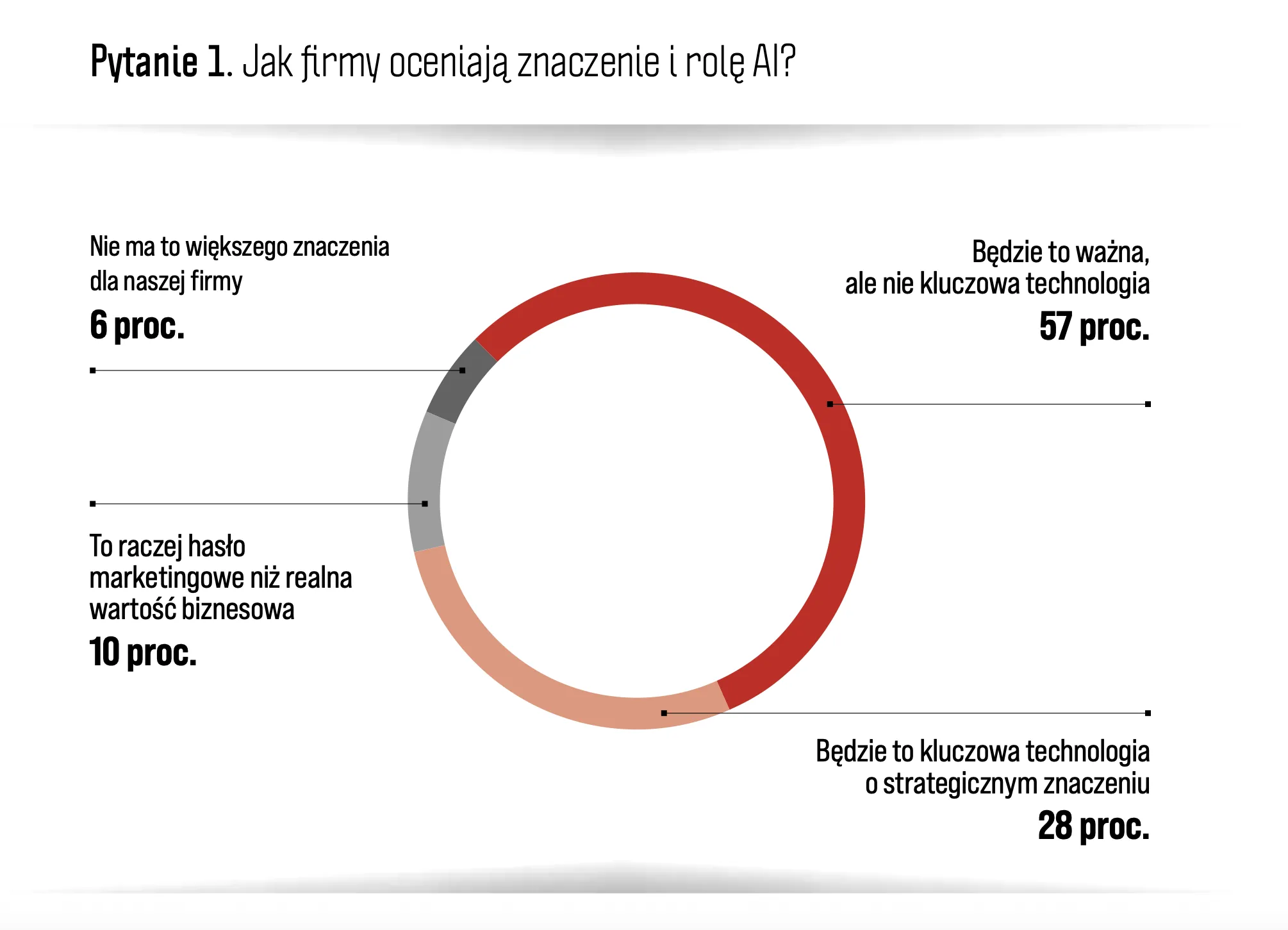
On the one hand, there is a broad and relatively mature awareness of just how important this technology is. A clear majority of companies—83%—see AI as important or even strategically critical for running a business.
At the same time, 16% downplay AI, labelling it a marketing trend or a technology of little relevance to industry.
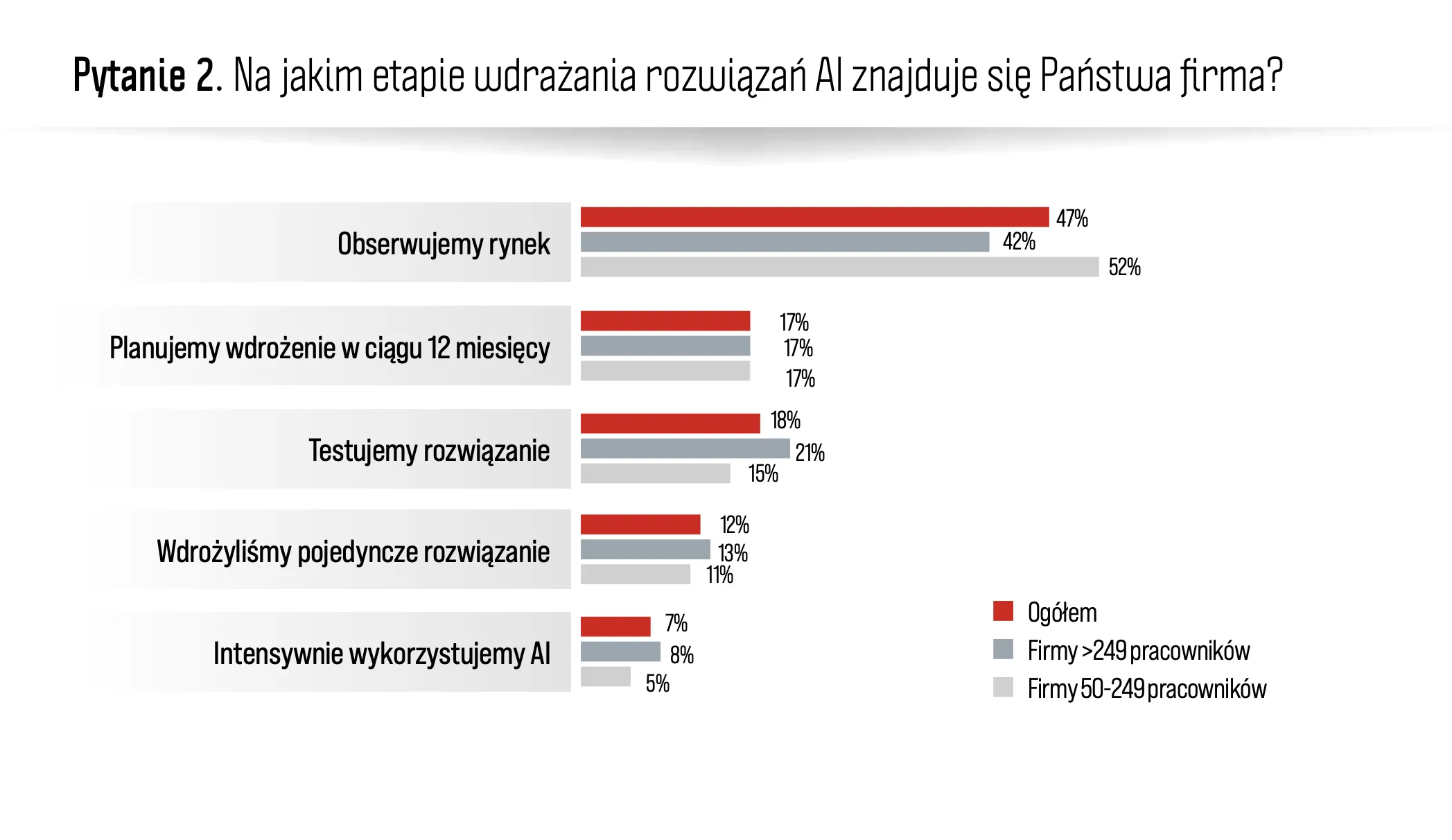
However, this conviction has not yet translated into action at scale. Many companies – especially mid-sized firms (50–249 employees) – remain in “watch and wait” mode.
Nearly 50% of medium- and large-sized enterprises in Poland are still passively observing the AI market, delaying decisions on concrete deployments.
Only 30% of companies (those testing or implementing a single solution) have taken any action, while only 7% of respondents report intensive AI use. The real gap lies between strategic understanding and tactical execution and it runs through the entire analysis.
Trend 1. Two speeds of adoption: tactics versus strategy
The data shows that Polish businesses are not adopting AI evenly.
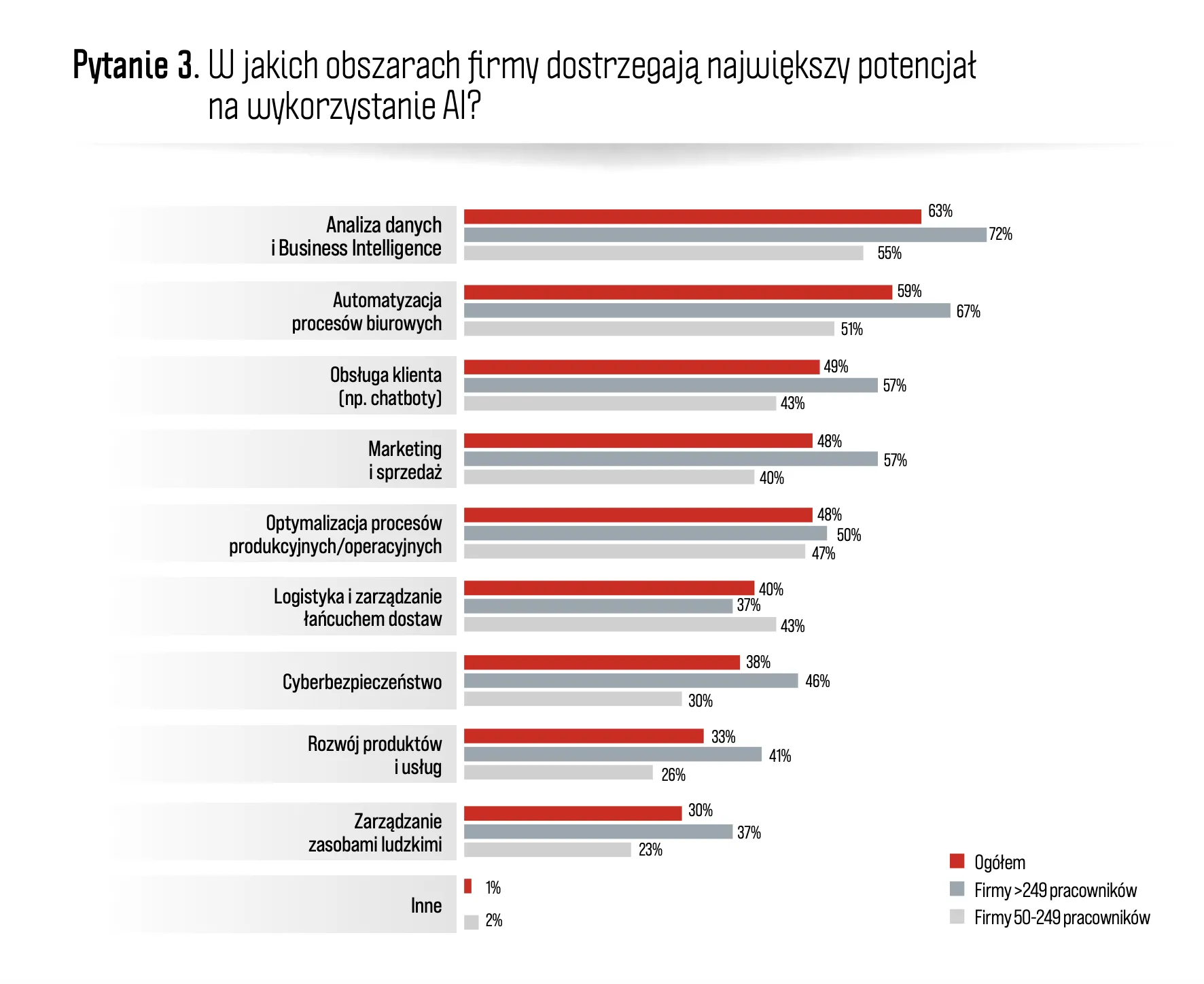
The largest companies (over 249 employees) are more likely to recognise AI’s potential in strategic areas such as data analysis (72%) and back-office processes (67%).
Smaller firms also value these areas, but with less intensity. Instead, they show a more substantial interest in AI use in logistics and supply chain management (43%).
The contrasting priorities point to two routes for AI adoption—strategic transformation for large corporates and operational optimisation for smaller firms.
Trend 2. Pragmatic expectations: business value, not a shiny tech toy
Companies associate AI deployment with tangible, measurable benefits that directly impact financial performance.
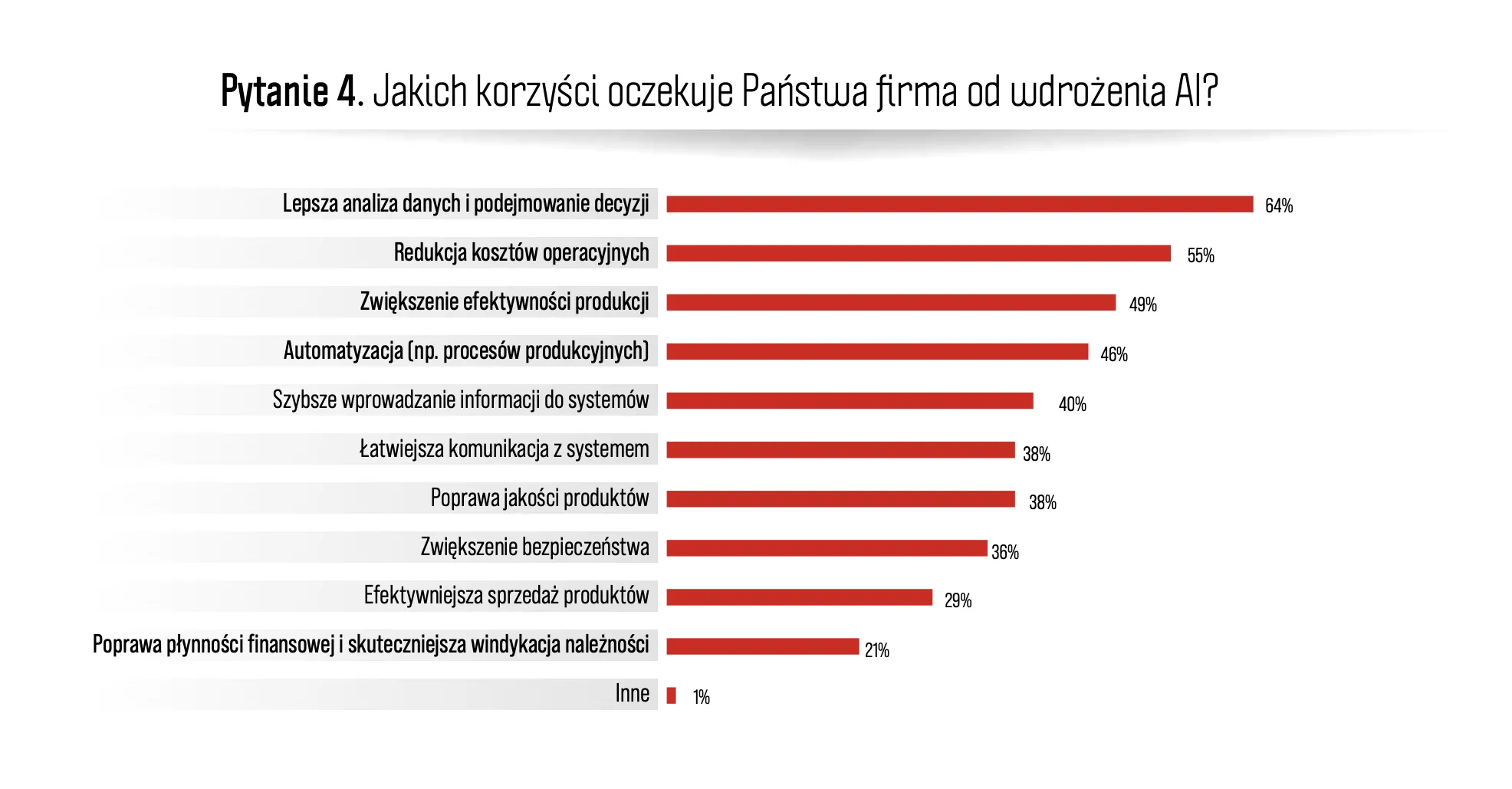
At the top of the priority list is improved capability for data analysis and decision-making (64%). Next, reducing operating costs (55%), increasing production efficiency (49%), and automating (46%).
The approach reflects a pragmatic mindset: AI is viewed as a tool for competitive advantage, not a goal in itself.
Trend 3. Trust beats price: security and provenance
Choosing an AI solution is a process in which Polish companies demonstrate exceptional caution.
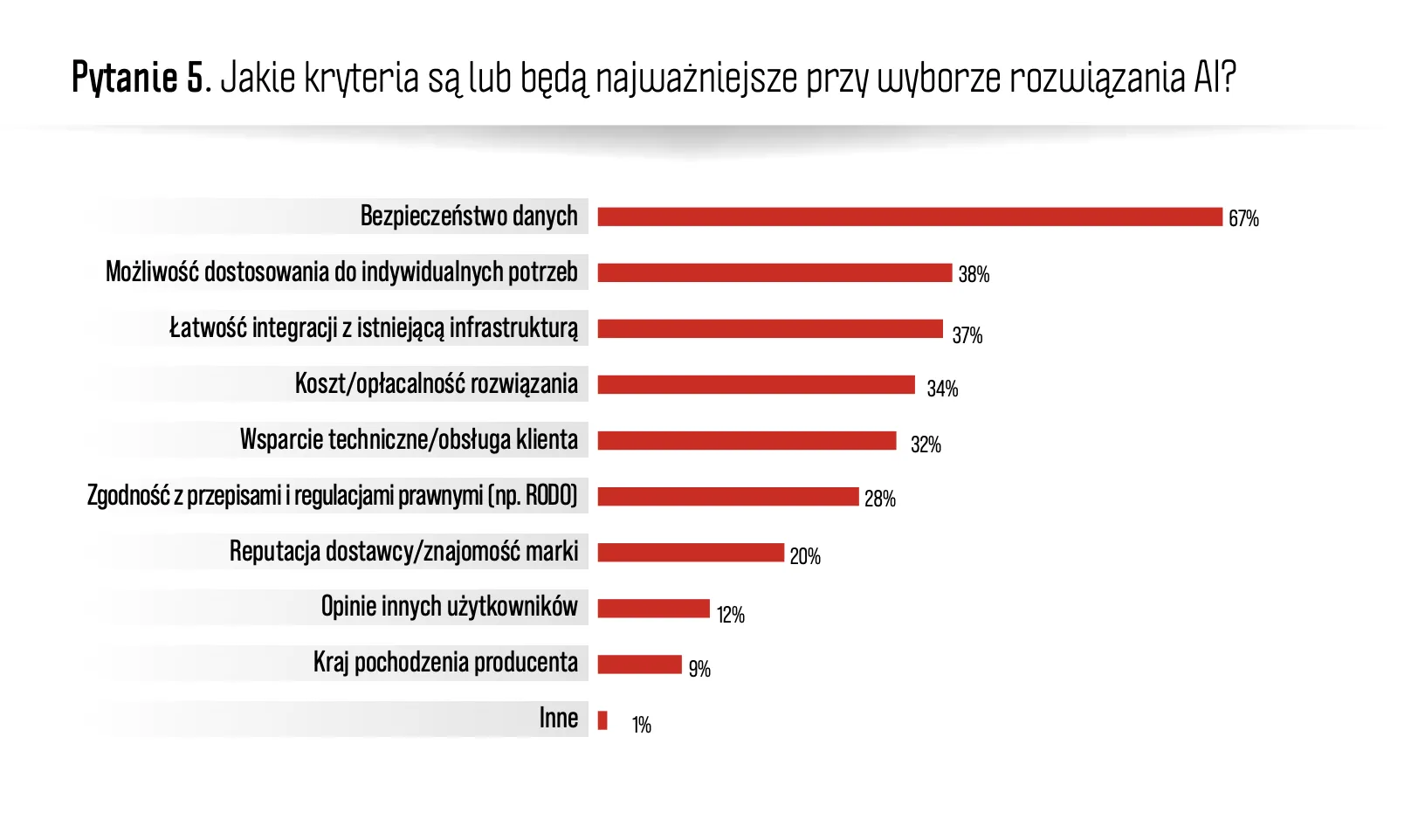
Data security is the absolute priority, identified as a key factor by 67% of respondents.
Next are the ability to tailor a solution to organisational needs (38%) and easy integration with existing infrastructure (37%).
Interestingly, price (34%) only ranks fourth in the hierarchy of decision factors. The ranking of priorities shows that companies prefer to build strong, secure strategic foundations before making decisions based purely on cost.
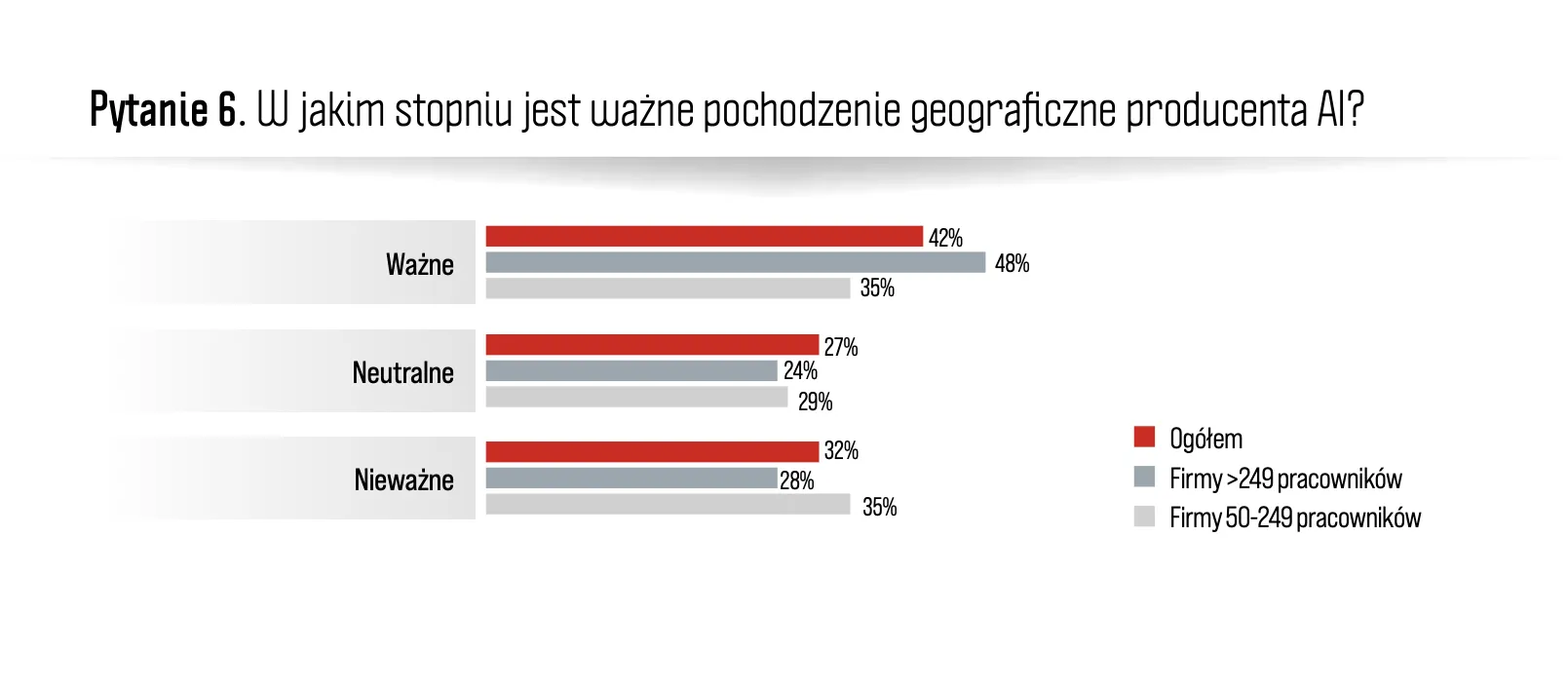
Supplier geography also matters – necessary for more than two-fifths of firms. Among large enterprises, this rises to 48%.
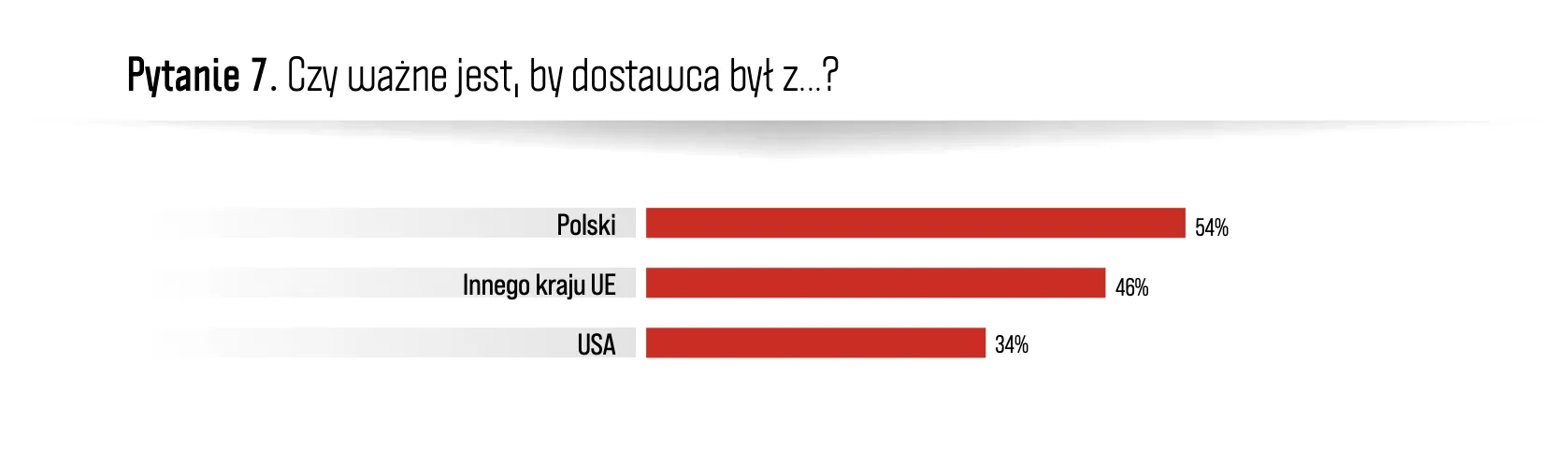
The most frequently indicated preferences are providers from Poland (54%) and other EU countries (46%). Geographic and cultural proximity reflects a drive to reduce risk and build trust, grounded in a shared understanding of regulation and business culture.
Trend 4. Regulation as a challenge, not a catalyst
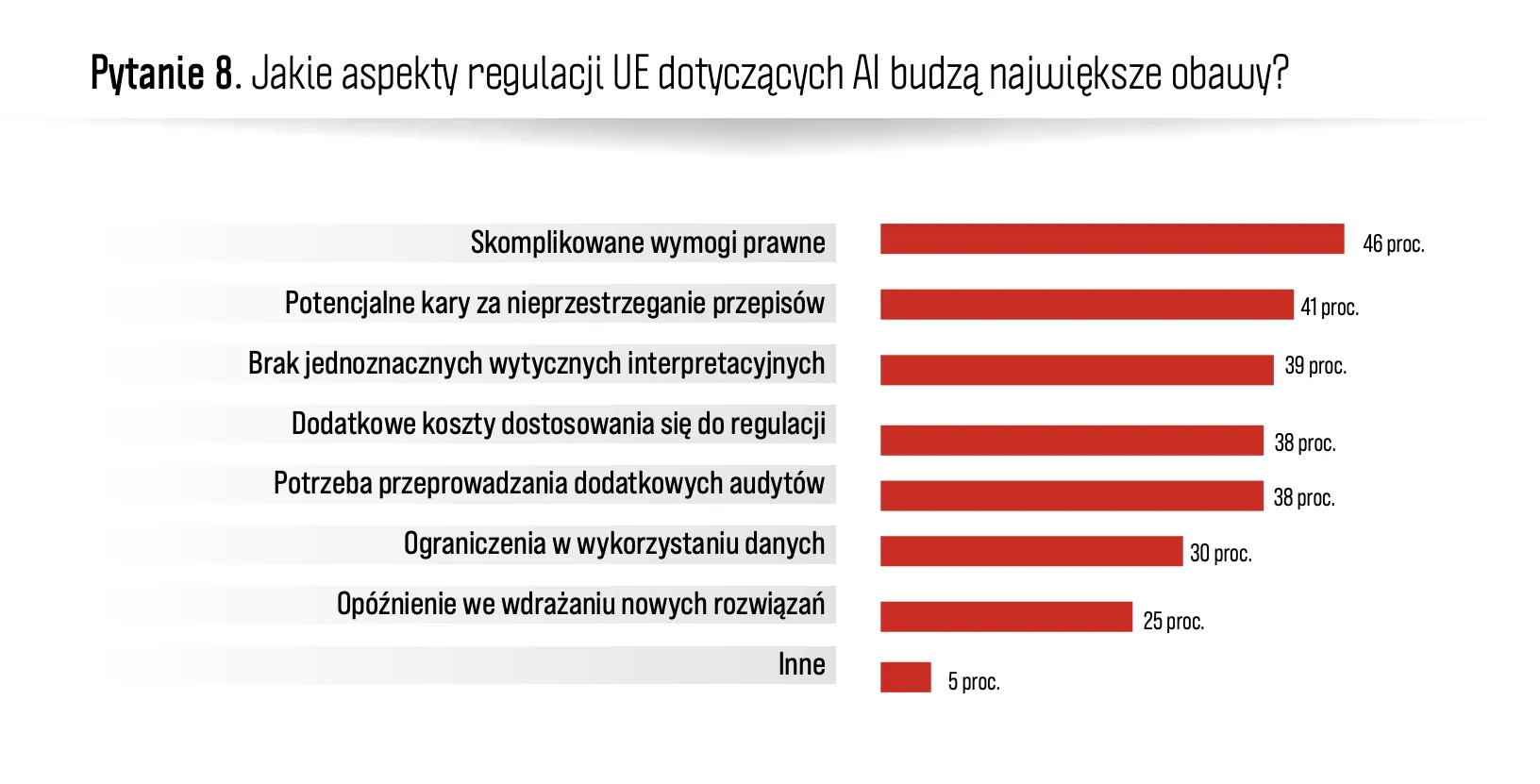
In Poland, the implemented AI Act is seen primarily as a source of concern rather than a spur to innovation. The main challenges are complex legal regulations (46%) and potential penalties for non-compliance (41%). Another significant issue is the lack of clear interpretative guidance (39%).
This anxiety points to the need for more transparent communication from regulators and technology providers—so companies can understand and implement required standards smoothly, rather than treating compliance like navigating a foggy roundabout at rush hour.
AI scenarios for Poland
Poland is entering a critical decade for AI adoption. The dominant trend is caution, but beneath it sit sensible, pragmatic priorities: security, flexibility, and concrete business benefits.
Which scenario becomes reality depends on how quickly Polish business leaders move from passive observation to active, strategic implementation. Based on the study data, three possible futures emerge.
Scenario 1: “The Pragmatism Advantage”
Companies deploy AI slowly, but strategically—focusing on building robust, secure and flexible systems.
Poland’s AI services market is growing dynamically, driven by trust and local capabilities. This is a path of steady growth, where Polish firms build competitive advantage through quality and security—not just the speed of deployment.
Scenario 2: “Digital Divergence”
Some companies move into intensive AI deployments and gain a market advantage.
Meanwhile, others remain in observation mode—driven by concerns and waiting to see results from domestic pioneers. This leads to a clear market split: innovators gain scale and efficiency advantages, while the rest try to wait it out, assuming they can catch up later.
Scenario 3: “Innovation Hibernation”
This scenario follows directly from the fact that only 33% of companies overall (26% of mid-sized and 41% of large firms) see AI’s most significant potential in product and service development.
Here, companies focus on optimisation and automation—boosting efficiency and cutting costs—but neglect product and service innovation.
As a result, Polish enterprises become highly efficient at producing existing products, but lose the ability to create profitable innovations that could redefine markets.
Foreign competitors, who invest more boldly in AI for R&D, gain an edge by launching breakthrough solutions that effectively make Polish production – however efficient and AI-supported – outdated. This is the scenario where efficiency becomes a trap: short-term gains quietly morph into long-term stagnation.
The data is precise: the time to act is now. The real question is whether Polish leaders will use AI to optimise existing processes—or to create entirely new, innovative value.
The publication AI RADAR Trendbook is intended to be an impulse for action and to encourage bolder thinking about AI—beyond a “wait-and-see strategy”. By showcasing AI applications across a broad spectrum—from IT, cybersecurity, and quantum computing, through industry, logistics, marketing, and commerce, to education, public administration, and telecommunications—it provides practical frameworks and inspiration to help leaders make strategic choices and avoid falling behind.





0 Comments