

Across the previous parts of this series, we moved from understanding the language of AI to defining AI as the company’s most valuable asset. Today, we touch on the issue boards find hardest: how do you lead people in a world where the line between human and machine intelligence is blurring? In the AI era, leadership becomes both an ethical act and a piece of strategic choreography.
Scalable automation is already within reach. Yet success depends not on the quality of the code, but on a redefined role of the leader.
The leader as a choreographer of hybrid teams
Forget traditional management. An era of hybrid teams is arriving – teams made up of people and virtual AI agents. In that reality, the leader becomes a “choreographer of work”. The task is to blend uniquely human strengths – empathy, creativity, and synthesis – with the machine’s computational power.
A key process becomes AI onboarding. The work no longer resembles a purely technical software rollout. Instead, it becomes a form of “mentoring” for machines, where leaders feed algorithms with unique knowledge and the organisation’s culture. The relationship with machines is starting to look like a partnership, where caring about the quality of what AI is “fed” is as important as caring about employee development.
The AI paradox: rising pressure on human skills
Paradoxically, the more work AI does for us, the greater the responsibility – and pressure – on the human being. Artificial intelligence can generate reports and analyses at unprecedented speed, but critical judgment and final decisions still rest with people.
A new risk follows: cognitive burnout. Modern leaders must protect the team’s mental well-being by designing processes that leverage AI rather than overwhelm employees. Everyone in the organisation should become AI-literate – from technical specialists, through Business Translators, all the way to end users.
Ethics is not a checklist. It’s the DNA of innovation.
The biggest test of strategic wisdom today is shifting from the question “Can we do it?” to “Should we do it?”
At Booster of Innovation, ethical leadership means:
- Building psychological safety:
employees must feel empowered to raise ethical concerns without fear of job repercussions.
- AI as a virtual board adviser:
using technology to stress-test strategy for hidden risks and bias, not merely to optimise on autopilot.
- The courage to look beyond your sector:
using AI to explore new business models that have previously sat outside your company’s reach.
Ethical AI is a conscious business decision.
Ethics in AI is not a constraint – it’s the foundation of durable value. Ethical choices separate companies that win a short-lived advantage from leaders who build trust for decades. Future leaders will be those who combine the power of technology with human wisdom and responsibility.
A reflection for the Board
In your organisation, is ethics just a line item in the annual report — or a fundamental criterion for selecting AI projects? How is your team coping with cognitive overload in an age of hyper-automation?
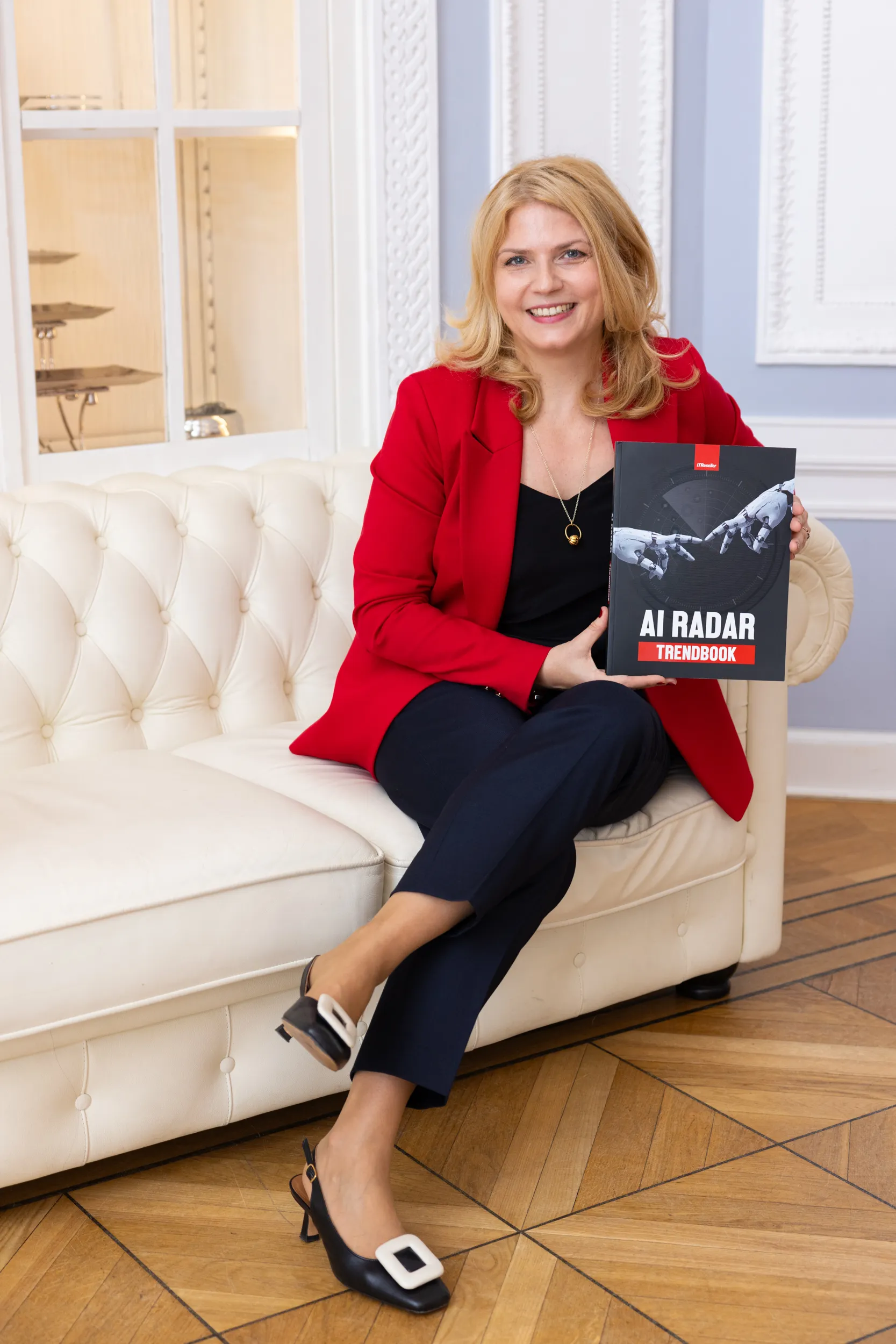
Your roadmap in the AI Radar Trendbook
Ethical leadership is one of the most substantial chapters in our publication. You’ll find practical guidance on building a culture of responsible innovation and preparing your team for the changes ahead.
👉 Download the full report and learn how to become the leader the AI era needs:



0 Comments