

We have launched a brand-new initiative! At the end of February, we brought together an exceptional group of experts at the Xanadu Gallery in Warsaw to exchange experiences, explore different perspectives, and draw inspiration from the latest discoveries in innovation and technology.
The key focus of the meeting was our latest Innovation Briefing report, titled “GenAI Trends 2025 – Productivity Plus”. During the presentation, I highlighted five key trends, offering insights into how they will shape the future of work, productivity, and innovation in the years to come.
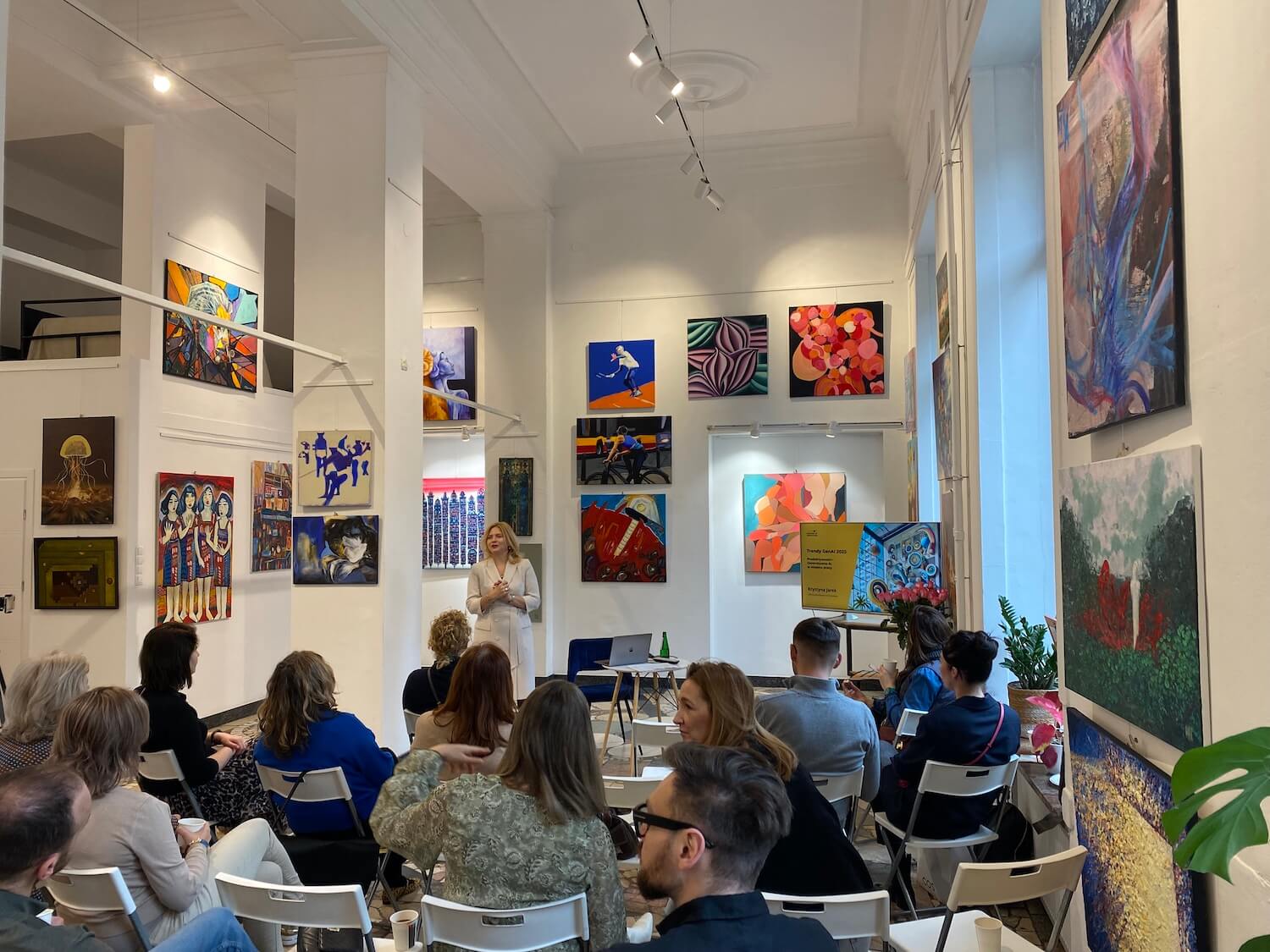
AI as the New Reality – Key Discussion Points
I opened the meeting with a brief introduction, emphasizing that AI is no longer a vision of the future—it is our present reality, reshaping how we work, make decisions, and create. It is not just technology that is evolving, but also the way we manage teams and shape organizational strategies.
During my presentation, I focused on key trends from the Innovation Briefing Report: GenAI Trends in the Workplace:
🔹 Leading in the Era of Office Centaurs and Cyborgs – Modern workplaces are spaces where humans and AI collaborate closely. As this cooperation deepens, new working styles emerge. Research from Harvard Business School and BCG identifies two key roles – Cyborgs and Centaurs – that represent different AI approaches. Cyborgs blend AI into their tasks seamlessly, while Centaurs divide work between human and AI activities. Interestingly, productivity depends less on the chosen style and more on proper training in generative AI tools. What does this mean for leaders? They must manage teams with different AI working styles and ensure all employees are trained to use AI effectively.
🔹 Never Prompt Alone – AI Work Etiquette – Using generative artificial intelligence requires new working standards. The key is not only to write effective prompts but also to share knowledge and learn together from the results of working with AI.
GenAI tools are designed for individual use, but we work as teams in business. This calls for new ways of working, which is why there is a clear recommendation: never prompt alone.
🔹 Pushing the Boundaries of Creativity with AI – Can AI be creative? This was one of the key questions raised during the meeting. Using scientific research, I showed that by working with AI, we can draw inspiration from its results, which often break away from typical human thinking patterns.
AI does not “create” in the traditional sense, but it can inspire, spark new ways of thinking, and generate ideas we might not have come up with ourselves. Creativity with AI is more about asking the right questions, combining different data, and staying open to surprising outcomes – which can lead to new, unexpected solutions.
🔹 The Negative Impact of AI on Employee Attitudes – Challenges cannot be ignored. Scientific research from Berlin University, presented in the trend report, shows that adding AI to work processes can negatively affect employee attitudes.
In the study, employees were told that AI would be responsible for quality control. As a result, they relied on AI and reduced their involvement. The control group, which was not given this information, continued working as usual and achieved better results.
Clear communication about how AI is used in the company—including its capabilities and limitations—plays a key role in maintaining productivity.
🔹 The Magic Trio for Working with AI – How to Use Technology Effectively – Contrary to the common belief, AI is not just about replacing routine tasks. In fact, we should take a broader view and rethink how we work. Let’s apply the magic trio:
- Automation – the first and essential step to improving processes,
- Assistance – selecting tasks where AI can act as personal support,
- Augmented – identifying areas where AI can provide unique, hard-to-access or currently unavailable information.
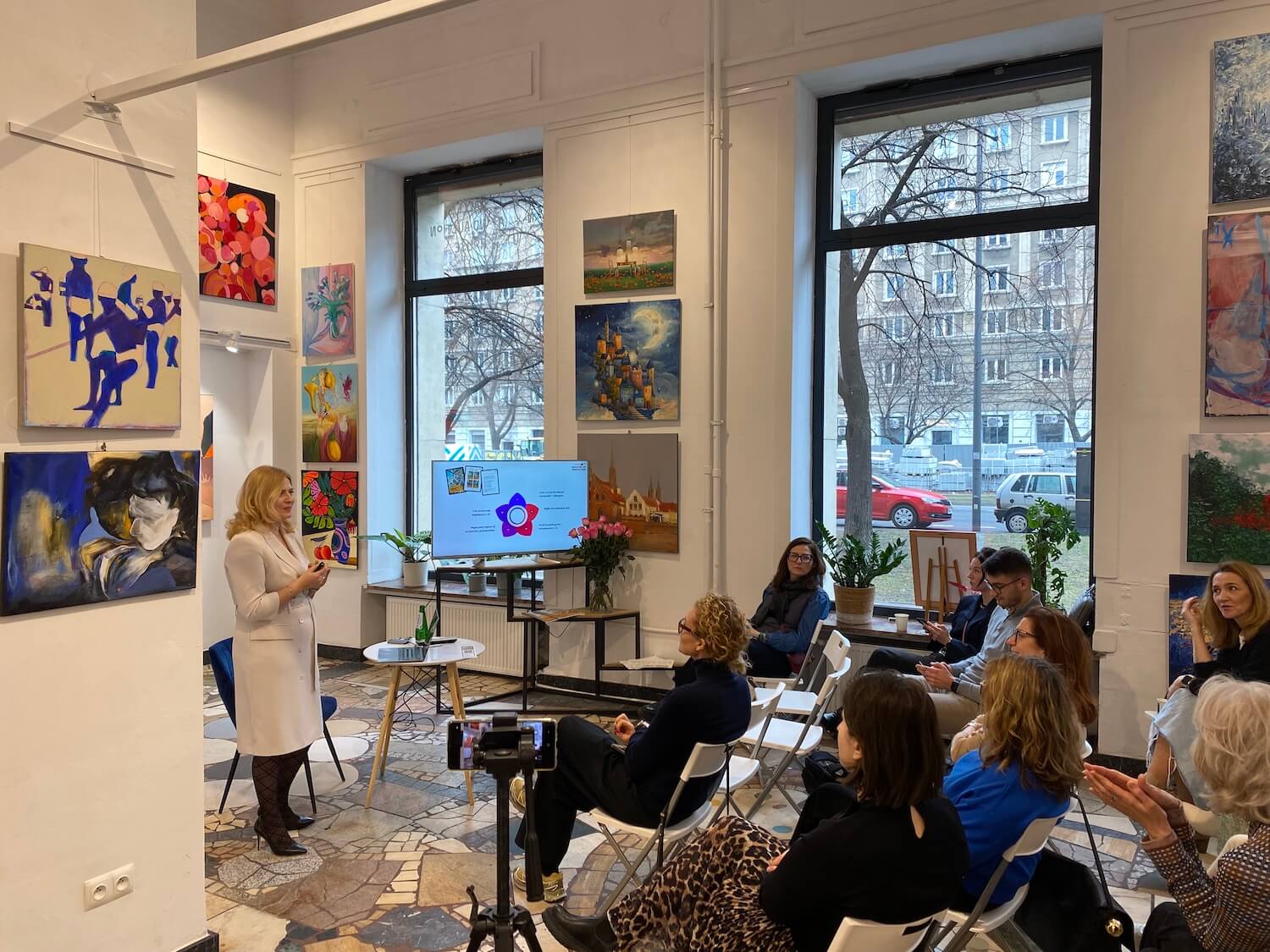
Engaging in Discussions and Participant Insights
After the presentation, we held an open discussion. Participants focused on implementing AI in different industries and its impact on the job market. A key topic was how companies can prepare teams for AI collaboration and avoid technological “traps”.
We also explored the role of leaders in introducing AI wisely. I highlighted that AI increasingly takes over strategic and creative tasks, leaving people to implement AI-generated suggestions. Leaders must decide if this is the future they want — if not, they need to set new standards. This is the key conclusion of the Innovation Briefing: GenAI Productivity Plus report.
Difficult questions were also raised: Does AI always support creativity, or can it limit it? How should teams handle resistance to technology? We agreed that AI can inspire and restrict — it depends on how it’s used. Leaders now face the challenge of managing teams of human employees and AI colleagues.
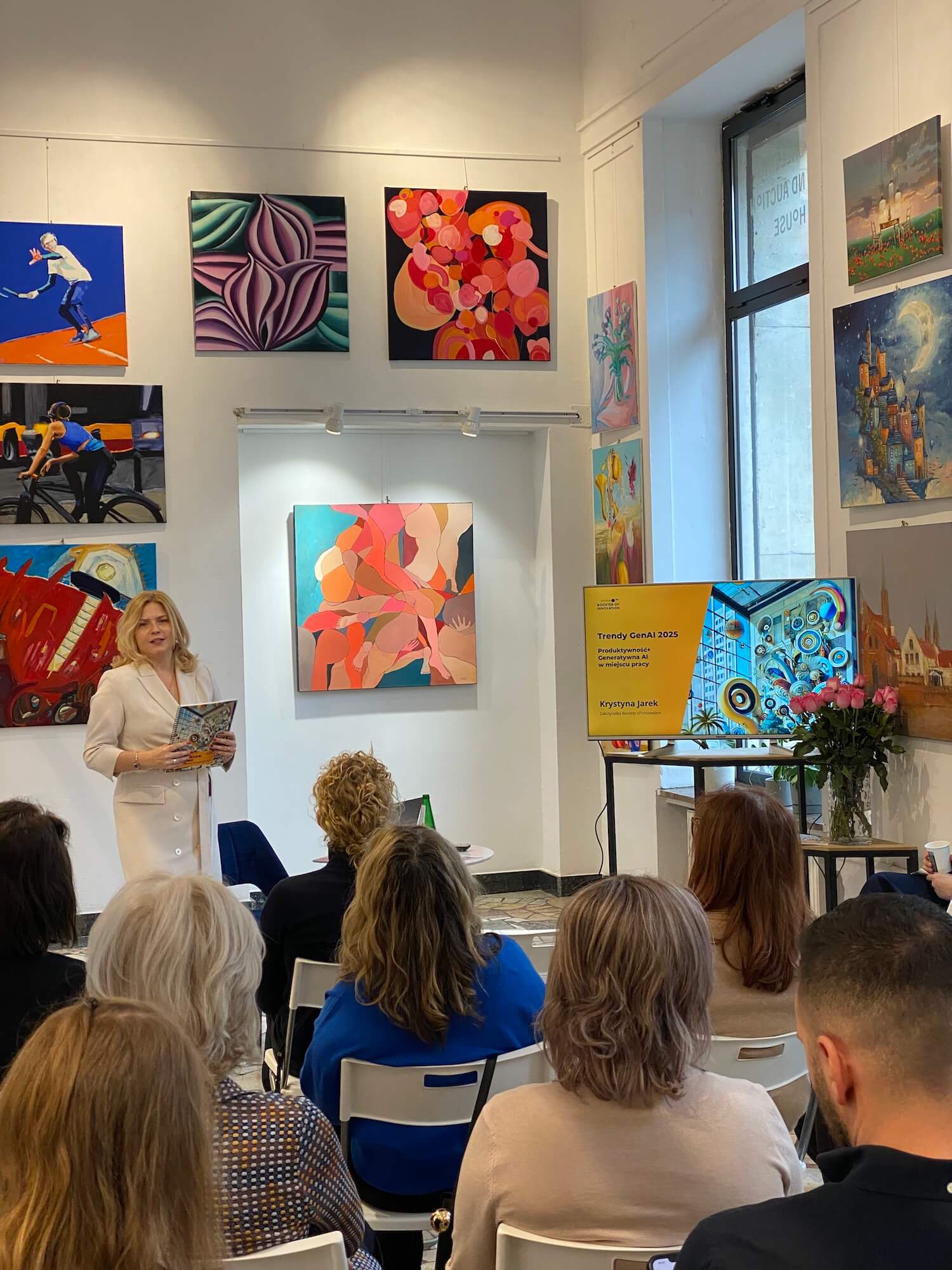
What’s Next? Upcoming Meetings
Our first business breakfast was filled with valuable discussions; I already know this is just the beginning! We are planning more events:
📅 3 April – Responsible Innovation: Beyond Digital Barriers
📅 22 May – Safe Europe: The Role of Innovation in Times of Multiple Crises
📅 12 June – PREMIERE! New Product Development with AI – Presentation of the book AI in Marketing, published by Routledge
The first “Creatively on Innovations” session reinforced the significance of the demand for discussions about AI in modern business. I sincerely thank all participants for the fantastic atmosphere, thought-provoking questions, and active networking.
This is just the beginning! ☕✨
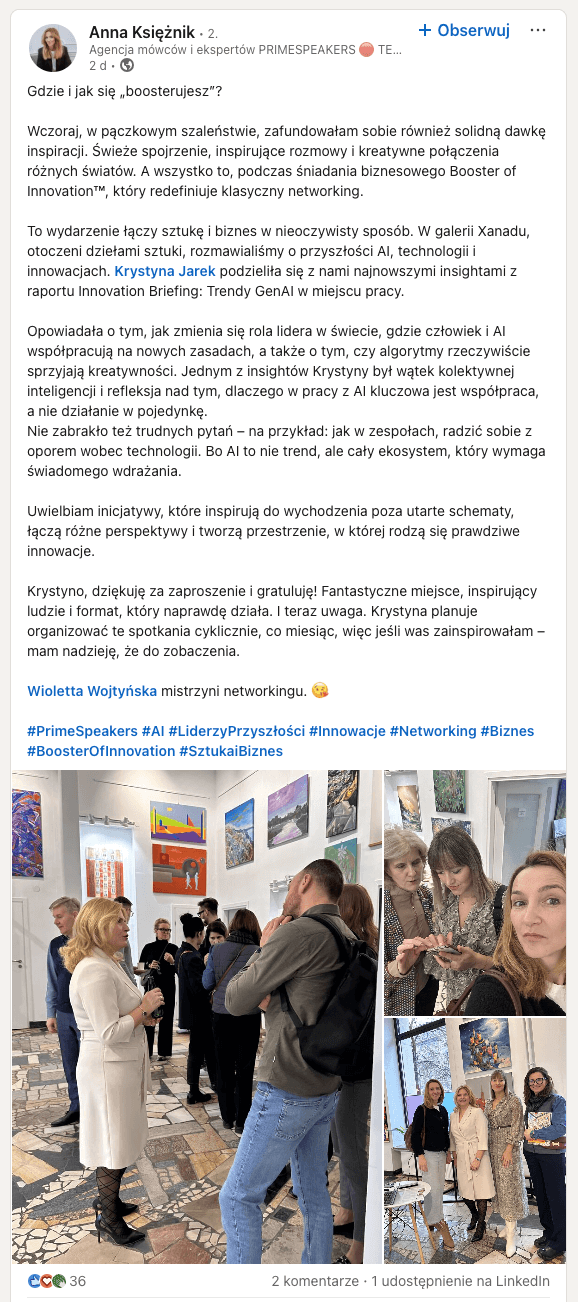
What Participants Are Saying About the First Business Breakfast:



0 Comments