

There are days when you feel the whole city vibrating with energy and the air itself seems thick with wisdom. On 18 November, at the POLIN Museum, I had the honour of attending the Equal Voices Summit 2025 – an event that, for me, stopped being a conference and became a manifesto.
It was a journey from cold, complex data (how AI measures bias) to blazing calls to action (how to take what we are entitled to, rather than politely asking for it). The day was truly special: it centred on courage, empathy and truth. I’m sharing my personal notes and the quotes that jolted me out of my routine and reminded me that the most significant changes always start with us.
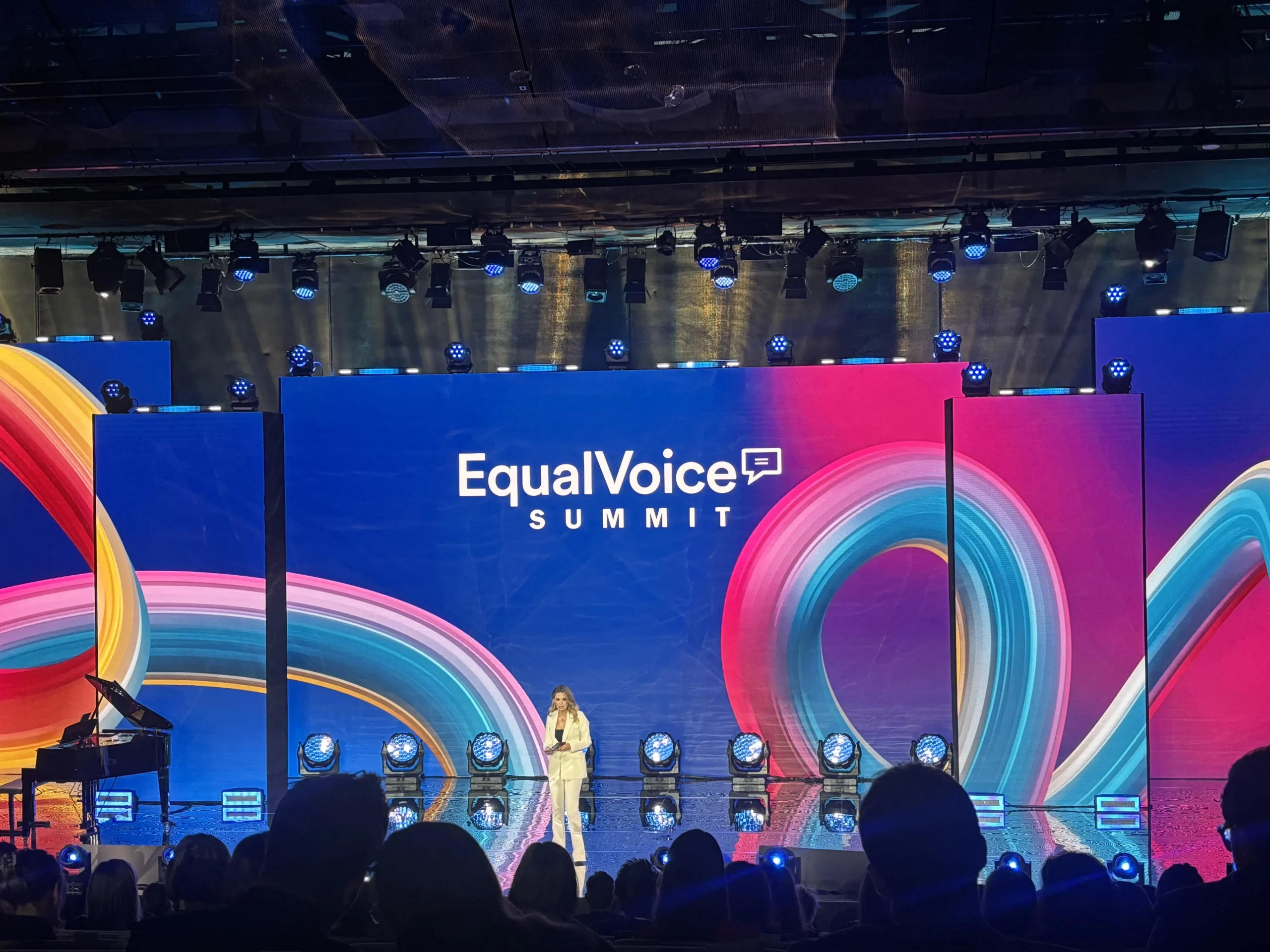
Ringier’s leadership: from image to measurable action
The event was opened by the phenomenal Katarzyna Gaweł, Head of Diversity, Equity & Inclusion at Ringier Axel Springer Polska, with her talk “If not now, when?” That question hung in the air and quickly became the unofficial slogan of the day. It was an invitation to act, not just to listen.
Kasia, inspired by her own children, showed just how crucial the role of the media is in building a world where equality is the norm – not the exception. Her passion was the spark that lit up the entire Summit.
Before I dive into the personal lessons from the speakers, I have to pay tribute to the vision that made this event possible. Equal Voices Summit is one of the best examples of how a powerful media organisation can move the idea of equality from feel-good brand slogans into measurable, strategic action.
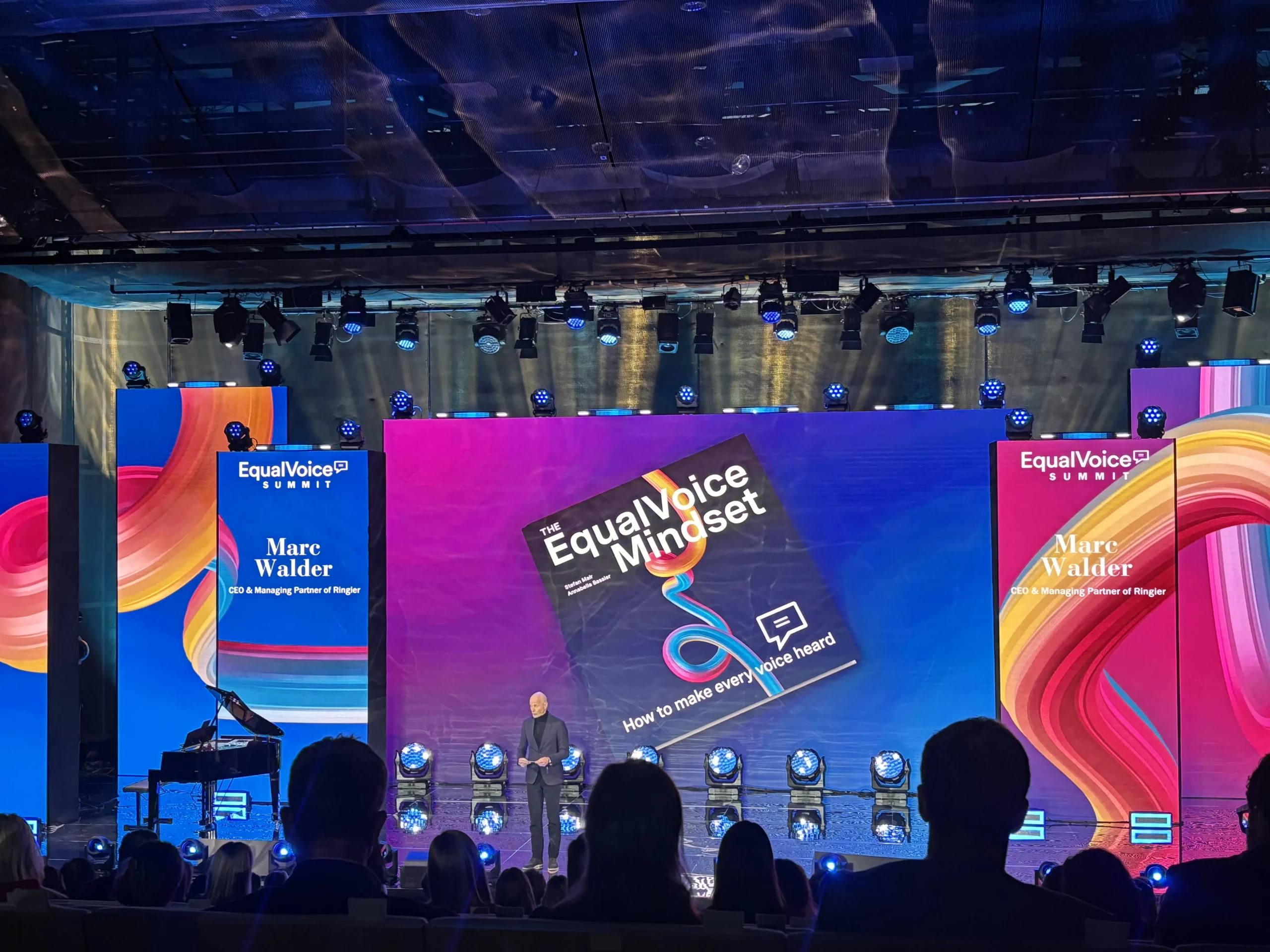
Marc Walder (Group CEO Ringier) opened the session with a key message: “From awareness to action.” He showed that today it is not enough to want equality – you have to count it. Gender equality has to be transparent, linked to business decisions and embedded in the daily work of newsrooms.
The use of EqualVoice Assistant as an example made it clear: this is not just “a nice strategy”, it is system-level innovation.
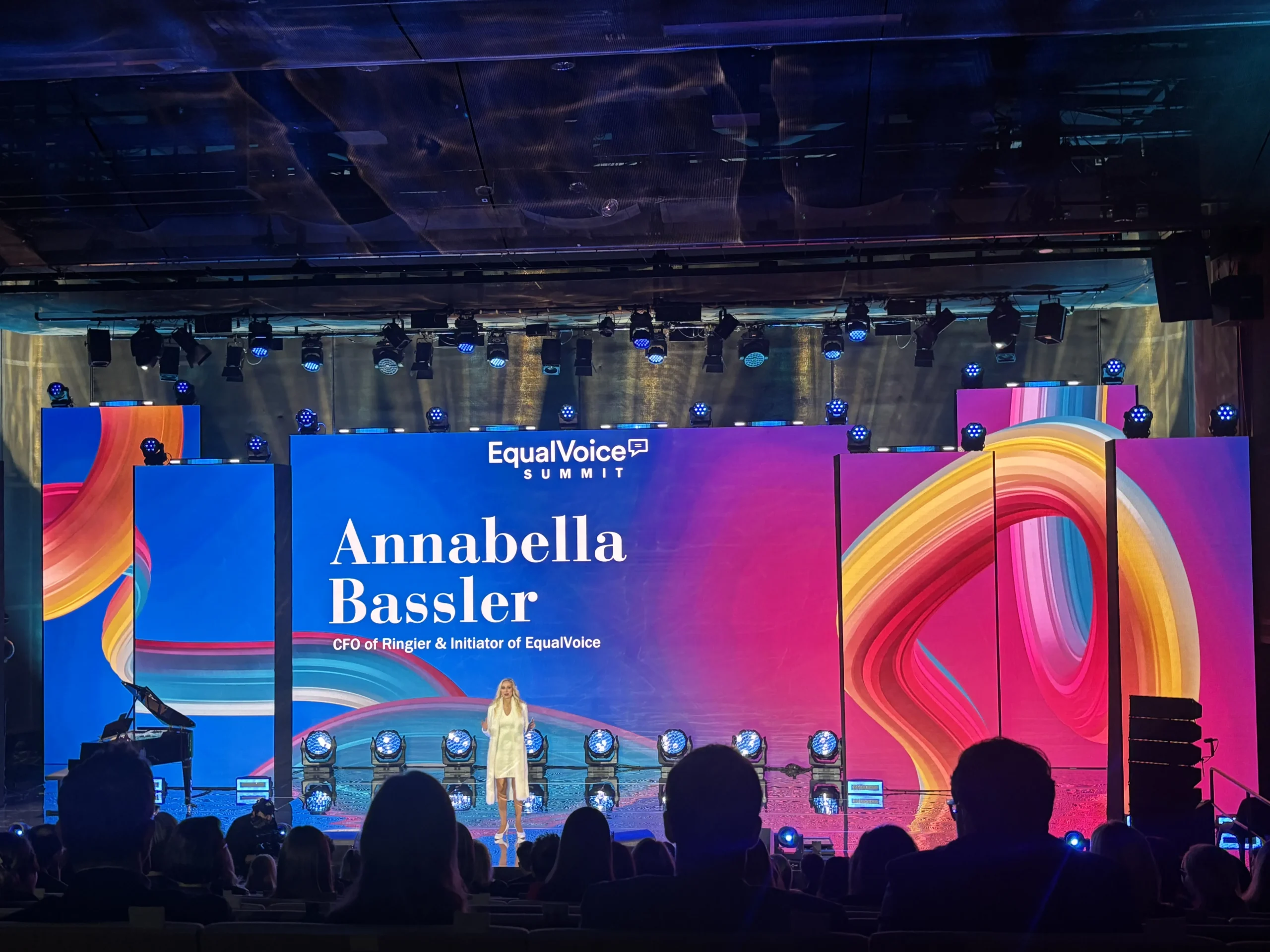
This vision was beautifully complemented by Annabella Bassler (CFO Ringier and initiator of EqualVoice), who said: “Visibility is power.” That line perfectly captures the scale of the shift. Equal representation of women in media narratives is like a new kind of fuel for social change. What we see in the media shapes our cultural norms, our aspirations and, ultimately, our leadership structures.
Thanks to their approach, the EqualVoice Factor has become a tool that safeguards women’s visibility at scale, across multiple countries. It made me realise that the same principle of measurable transparency should be transferred into our own business practices.
A shocking look into our brain: 200 years is far too long
The talk by Tessa Charlesworth from the Kellogg School of Management felt like a cold shower. Hearing that in 1946 only 35% of people believed that women and men are equally intelligent, and that today the figure has risen to 86%, gives real grounds for hope. We can see that explicit prejudice is slowly dying out.
But Dr Charlesworth also showed the “cognitive monsters”: implicit biases around age, weight or disability that have barely moved in 18 years.
“Forecasting models suggest that achieving neutrality in these areas could take more than 200 years.”
That statistic hit me hard. Can we, as people and as leaders, afford to wait 200 years? Of course not.
And technology precisely steps in and becomes a personal mirror. The presentation of EqualVoice Assistant was the key piece of the puzzle for me – an AI solution that measures inequality in the media and helps journalists make data-driven decisions. It is proof that AI should serve humanity, as the Nobel laureate would later say.
EqualVoice Assistant – AI as a teacher of our unconscious biases
When the numbers become overwhelming, we need technology to help us find the way forward. That’s precisely why I was so fascinated by EqualVoice Assistant – a real-life example of how AI can serve humanity.
The solution, developed by Ringier and Ringier Axel Springer Tech, analyses editorial content and detects bias and gender visibility imbalances. Crucially, it does not limit journalists’ creativity – instead, it provides them with data to make more conscious decisions.
Its real power lies in its functionality. As you write, it analyses the text in real time and:
- Highlights fragments that reinforce stereotypes or one-sided assumptions
- Explains why a particular fragment has been flagged, acting as an educational layer
- Suggests concrete, more inclusive alternatives that preserve the original meaning
The tool doesn’t just support newsrooms (where it is already a permanent part of the process for over 32,000 articles a month); it also acts as a universal equality filter for Communications, PR, Marketing and HR teams. It helps organisations minimise the risk of unconscious bias in their communication.
For all AI and systems-change enthusiasts, I highly recommend visiting the EqualVoice website to see how this technology works in practice: HERE.
Heart-led leadership – the strength of our shared humanity
When Beata Drzazga took the stage, I felt as if I had been handed a user manual for authenticity. Her philosophy of heart-led leadership is a recipe for enormous success that does not require us to stop being human.
The key is empathy, which does not mean being “too soft”, but listening carefully to what is said between the words. It is about respect when making difficult decisions that have to be taken anyway.
My favourite quotes:
“Empathy starts with careful listening – listening to what people say, but also to what they say between the words.”
“Courage is the wings of entrepreneurship.”
I’m adopting that last quote as my personal motto for the coming months. It reminds me that the biggest businesses and the boldest innovations are born where there is courage to trust yourself and to take a risk despite the sceptics. Intuition is a valuable tool, and trusting yourself is the foundation of confidence in action.
Does empathy pay off?
Beata Drzazga’s concept of Heart-Led Leadership was enriched by a fascinating panel moderated by Agnieszka Filipiak from Forbes Women, featuring Beata Drzazga and Marek Sypek (Stock Spirits Group). It was a meeting – almost a clash – between the world of a female founder and that of a global senior executive, with a surprisingly strong common denominator: empathy and equality are transformative forces, not a “nice-to-have”.
Marek Sypek, a leader with many years of experience in FMCG, brought a pragmatic voice to the conversation: leaders must be empathetic, but also consistent. He stressed that the way we treat people has a direct return – people treat the organisation the way we treat them. The definition of feedback he shared really stuck with me: “If we give feedback, it means we care.” The moment we know that a conversation no longer makes sense, we let it go. I don’t think you can capture the essence of authentic engagement any better than that.
However, the most interesting part of the discussion was the debate on change. The leaders agreed that while education and positive role models work, the time for change without regulation may have passed. We heard:
“Everyone had the chance to show they would do it without regulation – but they didn’t. So let’s introduce regulation. In my view, not only regulation but also sanctions are needed if we want anything to change.”
A strong and refreshingly bold perspective – does ethics require legal sanctions? Pragmatism, combined with evidence that ethical (yet firm!) decisions “did not turn out financially much worse at all” (as in the case of saving jobs instead of closing a factory – an example given by the Stock CEO), reinforced my conviction that values-based leadership is simply innovative business.
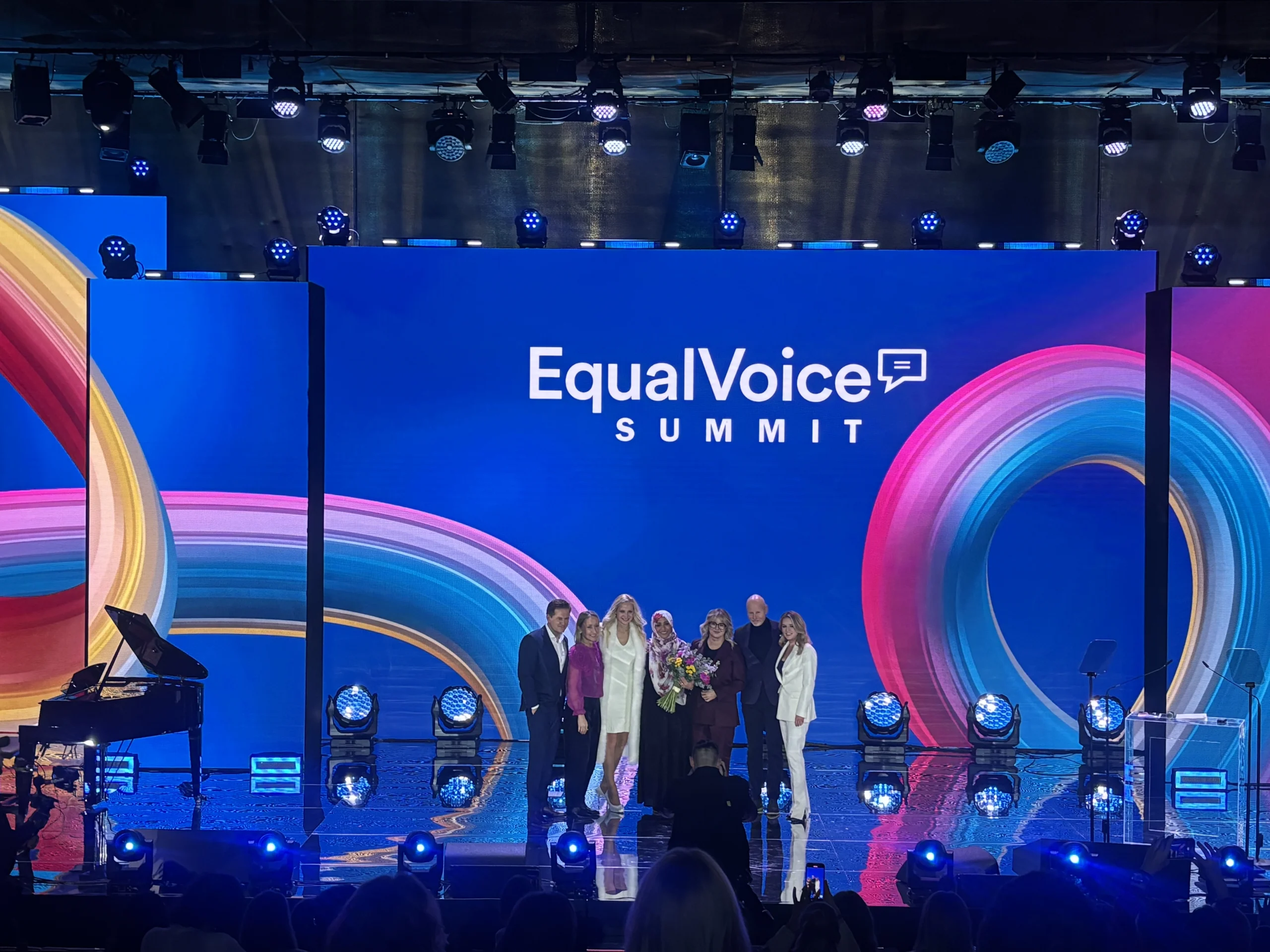
Are you visible? A lesson in narrative and the first step towards freedom
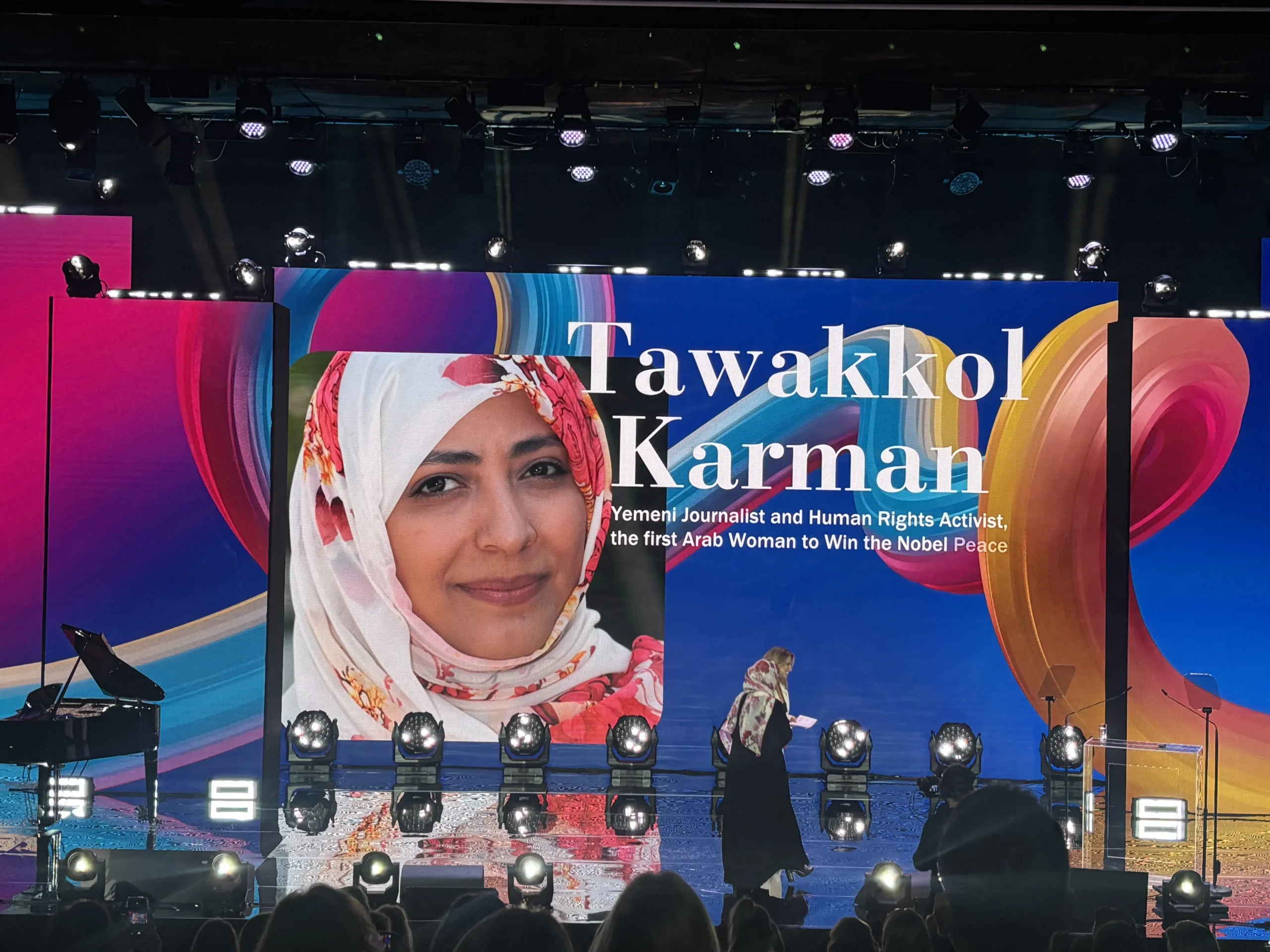
Tawakkol Karman’s star speech, the Nobel Peace Prize laureate from Yemen, had many layers. Still, one in particular resonated with me as someone building a brand in the digital space: the role of media and narrative.
She spoke about the need to change how women are portrayed, especially those from the Global South – not only as victims, but as great leaders and heroines standing up to tyranny. Here is a question to all of us: how do we tell our stories?
The most important and inspiring lesson for me? Rights and equality are not something you politely ask for – they are something you claim.
“Visibility is not a privilege. It is a right you should take, not ask for.”
The Nobel laureate encouraged the audience and strongly underlined that words must turn into action. We should not wait for invitations. We must be visible, heard and represented in every sphere of life.
Her appeal to reject symbolic seats and demand half the chairs is a powerful signal that the time has come for real, not decorative, participation in decision-making.
A leadership masterclass – how do you shape inner strength?
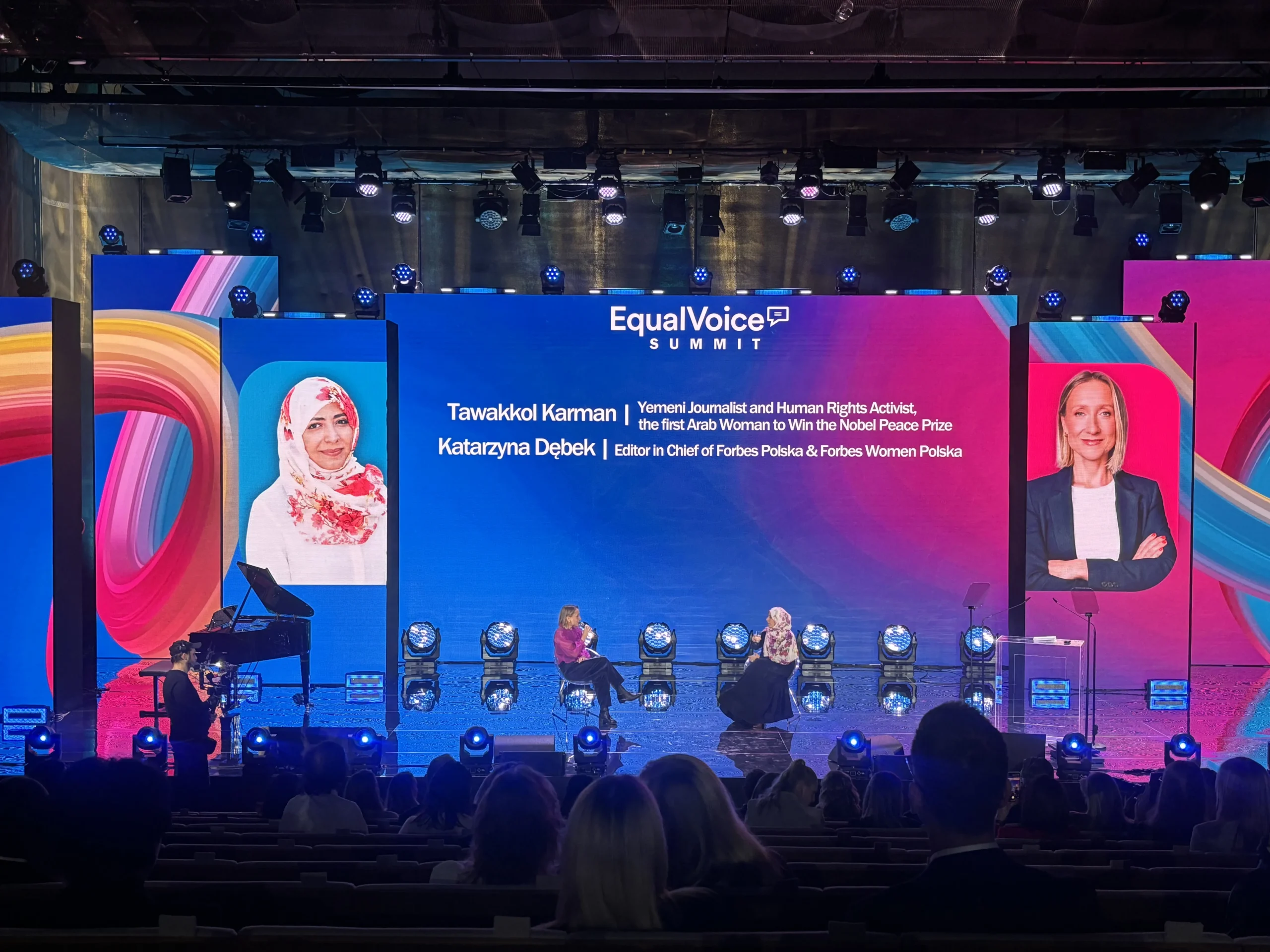
The interview conducted by Katarzyna Dębek, Editor-in-Chief of Forbes Polska, was a genuine masterclass. Instead of questions about politics, we heard about the Nobel laureate’s personal philosophy, her journey to becoming a leader and how an unbreakable will to fight is forged.
From the whole conversation with Tawakkol Karman, I picked out three themes that resonate most with me and that translate directly into personal action.
1. Personal responsibility instead of waiting for change
Her strength is rooted in a simple principle she learnt at home. The point was not to complain about the country’s problems, but to act.
“I asked my father why people are so [poor], and he said: What will you do? What is your solution?”
That sentence flips the perspective. How many of us are waiting for “someone” to fix the problem in our company, our community, our country? The Nobel laureate teaches us that you are the solution.
Authentic leadership starts when you can say to yourself, “I am the one who will do it.”
2. Being afraid is not shameful – giving in to fear is
In the face of real threats, dictatorship and death threats, Tawakkol Karman speaks about fear openly, stripping it of stigma.
“Being scared is not shameful. What is shameful is when you allow that fear to control you.”
I took this as a great source of inspiration for all of us who confront “smaller” fears every day – the risk of a new project, a public speech, or a career change. Courage is not the absence of fear. Courage is acting despite fear, refusing to let it sit in the driver’s seat.
3. Technology must serve humanity – not the other way round
In an era when we are all either thrilled by or anxious about AI, her voice is crucial. Yes, social media played an essential role during the Arab Spring, but regimes have since learnt how to use them for “electronic wars”. Her ethical perspective is a clear signpost:
“Artificial Intelligence should serve humanity, not humanity serve Artificial Intelligence.”
It is a reminder that even the most innovative tools – the very tools that we, as Booster of Innovation, want to implement – must be designed and used with human wisdom and values at their core. Technology should amplify our potential, not turn us into “products” or “numbers”.
Back to everyday life – with renewed energy
I am returning from the event with a fresh list of goals and, above all, with a deep conviction that systemic courage is the only way forward.
This day, filled with inspiration from a Nobel laureate, a psychologist from Kellogg and business leaders, showed me one thing very clearly: my small steps have global significance.




0 Comments