

In the latest edition of the AI Radar Trendbook, one of the chapters is devoted to the theme of “Leadership in the Age of AI.” It makes one thing abundantly clear: the effective implementation of artificial intelligence does not begin with choosing a model or a tool, but with leaders making strategic decisions about where AI can genuinely create value, which processes it should transform, and how to prepare the organisation for a new way of working.
From inspiration to action
Our AI Radar Trendbook has attracted strong interest from CEOs, board members and transformation leaders.
The examples gathered across multiple industries clearly show that artificial intelligence is no longer a concept of the future – it is here and now, already reshaping the way businesses operate. Today, decision-makers are no longer asking whether to implement AI, but how to get started.
In this article, I outline a practical path to implementing AI within an organisation: from building a business case and identifying the first use cases, through selecting the right technology architecture, to creating an organisational culture that enables people and algorithms to work together effectively.
How to convince the board to invest in AI
Implementing artificial intelligence in an organisation should begin not with technology, but with a clearly defined business rationale. The key first step is identifying real operational problems — process bottlenecks that AI can help resolve.
This may include, for example, automating data analysis, speeding up customer service, or supporting strategic decision-making. On this basis, organisations build a business case, demonstrating potential benefits such as scaling operations without a linear increase in staffing costs.
At the same time, regulatory and ethical considerations must be taken into account, including the initial classification of the system in line with the requirements of the EU AI Act, as well as an assessment of the risks associated with potential algorithmic bias.
In practice, this means verifying, among other things, whether models reproduce historical errors embedded in the data – for example, in recruitment processes or credit assessment. Only by combining the business, technological and regulatory perspectives can an organisation define the long-term strategic objectives of AI implementation and secure board approval based on hard data and realistic projections of value for the business.
The companies of the future will not compete solely through products, but through the architecture of their decision-making systems.
Where AI will deliver the fastest value for the organisation
Successful AI implementation begins with a robust assessment of resources and the identification of areas where the technology can deliver quick, measurable results – the so-called low-hanging fruit. The first step is a digital readiness audit, covering an evaluation of the technology infrastructure, available tools, and the level of systems integration across the organisation.
At the same time, the quality of the data must be verified: is it structured, complete, and properly prepared for training AI models?
More and more companies are also discovering the phenomenon of Shadow AI – the informal use of AI tools by employees — which should be identified and brought within appropriate governance frameworks. Another part of the assessment involves analysing potential projects in terms of the balance ROI and security, prioritising initiatives with high business value and low risk.
An equally important role is played by documenting data provenance through Data Lineage practices, which helps avoid problems related to copyright and regulatory compliance. The whole process should culminate in a process map highlighting the specific points at which AI can support teams in their day-to-day work.
The biggest mistake in AI implementation is starting with tools instead of business problems.
From pilot to scale
Once business objectives have been defined and the organisational assessment completed, the next step is to design the technological architecture for AI implementation.
At this stage, organisations decide on the implementation path – whether to begin with rapid tests in a proof-first model to validate the potential of a solution, or to develop the system using a lean AI approach based on existing components and off-the-shelf tools.
Another key dilemma is the choice between SaaS platforms and model integration via API, which affects both the degree of control over the solution and the cost of maintaining it.
At the same time, organisations should prepare an exit strategy to minimise the risk of becoming dependent on a single technology provider. The location and security of data are also becoming increasingly important, particularly in the context of solutions such as Sovereign Cloud, which enable sensitive information to be stored within specific jurisdictions.
Another vital element of the architecture is selecting the right technology partners and preparing the infrastructure for future AI scaling, so that systems can handle of increasing number of queries and business processes as the organisation grows.
The companies winning in the age of AI are not experimenting more — they are experimenting more intelligently.
How to manage the cost and quality of AI systems
Once the technological architecture has been defined, the key challenge becomes operationalising AI – in other words, managing the costs, quality and risks associated with the day-to-day use of models.
An increasing number of organisations are introducing FinOps practices tailored to AI environments, enabling real-time monitoring of token consumption, GPU computing power and the cost of model queries.
Companies are redefining their success metrics: alongside time savings, the quality, accuracy, and consistency of responses generated by AI systems are becoming increasingly important. A technical roadmap is also becoming a core management tool, outlining the successive stages of implementation and measurable milestones.
In operational practice, it is equally necessary to monitor the phenomenon of model drift, meaning the gradual decline in a model’s performance over time, which requires early warning systems and regular validation of results.
An additional layer of oversight involves managing supplier risk through Third-Party Risk Management practices and maintaining a central register of all AI solutions operating within the organisation—the so-called AI inventory. This approach allows companies not only to control costs and risk but also to build a transparent governance system for a technology that is becoming increasingly critical to business operations.
Why AI transformation starts with people
Technology in itself does not create competitive advantage – the key lies in combining AI solutions with the right organisational structure, capabilities and working culture. In many companies, the first step is appointing an AI Leader – someone responsible for bridging the business and technology perspectives and coordinating AI-related initiatives.
New operational roles are also emerging, such as engineers responsible for maintaining models through MLOps and LLMOps practices, ensuring the stability and development of systems after deployment.
A crucial element of transformation is also the development of employee capabilities through AI Literacy programmes, focused not only on using tools, but also on understanding their limitations and interpreting their outputs. In many business processes, the Human-in-the-loop mechanism remains in place, ensuring that final decisions in critical areas still rest with a human.
Organisations are also introducing transparency standards, informing customers about the use of AI in services and communication. Yet this transformation also requires a shift in workplace culture – incentive systems increasingly reward innovation and effectiveness, while leaders consciously manage the emotional side of change, helping employees move from fear of automation to actively co-creating a new model of work.
The organisations of the future will be built not around technology, but around people who know how to work with it.
From pilots to organisational transformation
Implementing artificial intelligence is not a one-off technology project, but a process of organisational transformation – encompassing strategy, systems architecture, employee capabilities and the way decisions are made. It is becoming increasingly clear that in the age of AI, competitive advantage belongs not to the companies that test new tools the fastest, but to those that can integrate AI systematically into the way the entire organisation operates.
That is precisely why the role of leaders who can connect technology with business, manage regulatory risk, and build a culture of collaboration between people and algorithms is growing in importance.
If you want to gain a deeper understanding of how leadership and organisational transformation are changing in the world of artificial intelligence, the AI Radar Trendbook is well worth reading. The publication presents key technology trends, AI development scenarios, and practical guidance for leaders and organisations preparing for the next phase of the technological revolution.
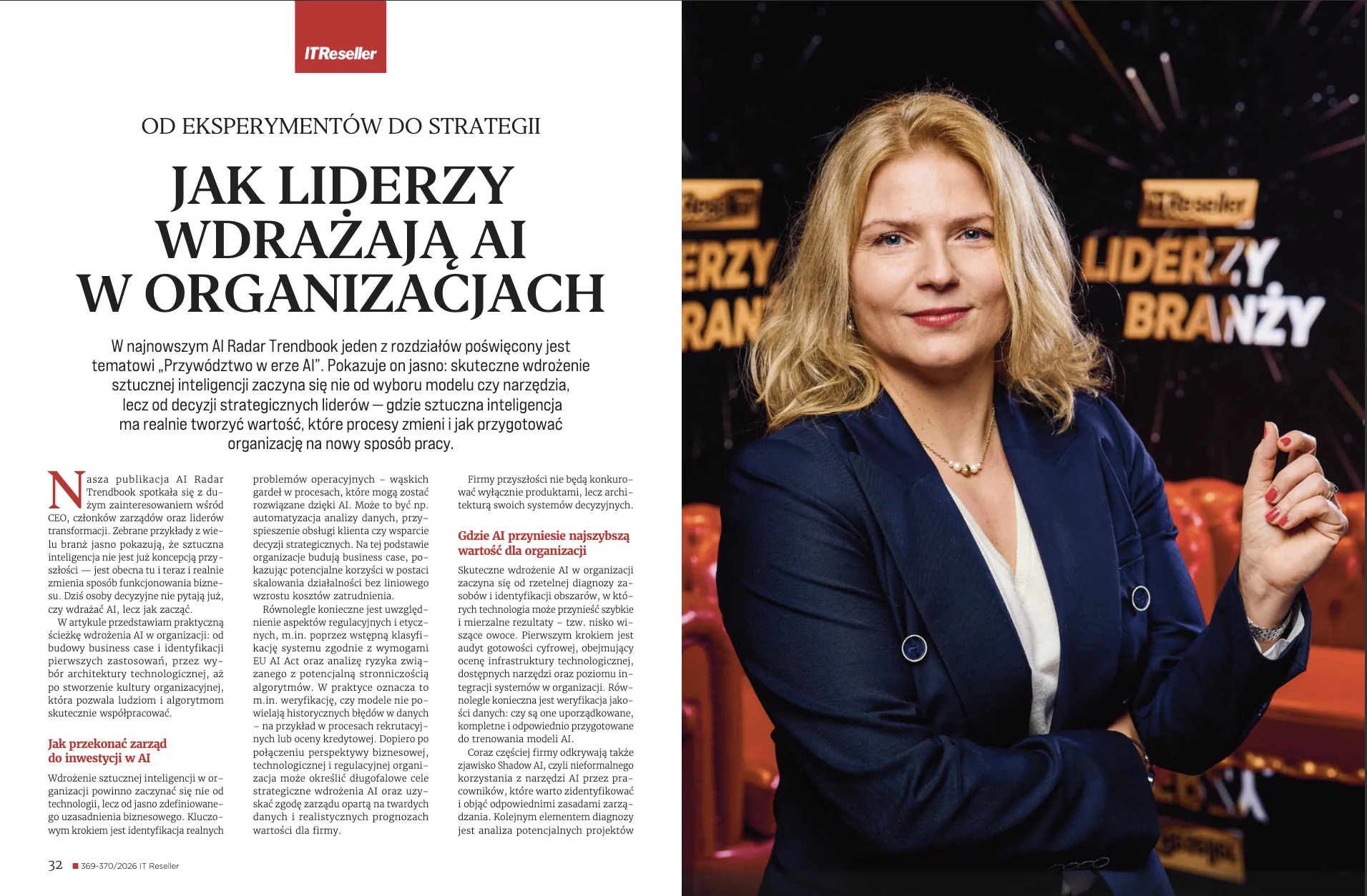
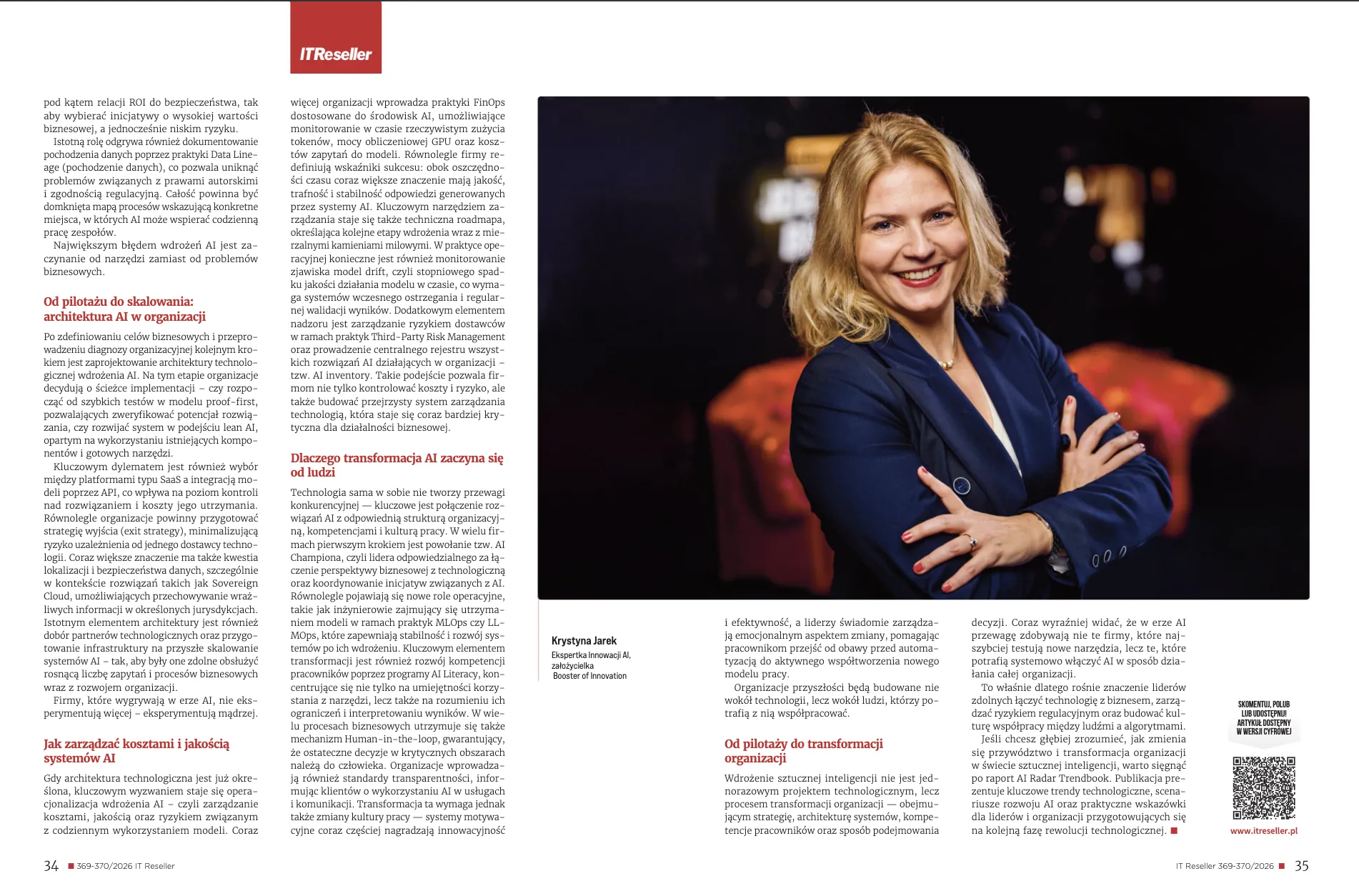
The article was published in the most popular technology magazine among tech companies.






0 Comments