

The most inspiring and strategic moments in consulting often happen where technology and innovation meet history, and where open, human dialogue takes centre stage. This year’s Museums Night brought exactly such extraordinary and unplanned circumstances. It became the starting point for deep, high-level discussions about the shape and future of the Polish education system.
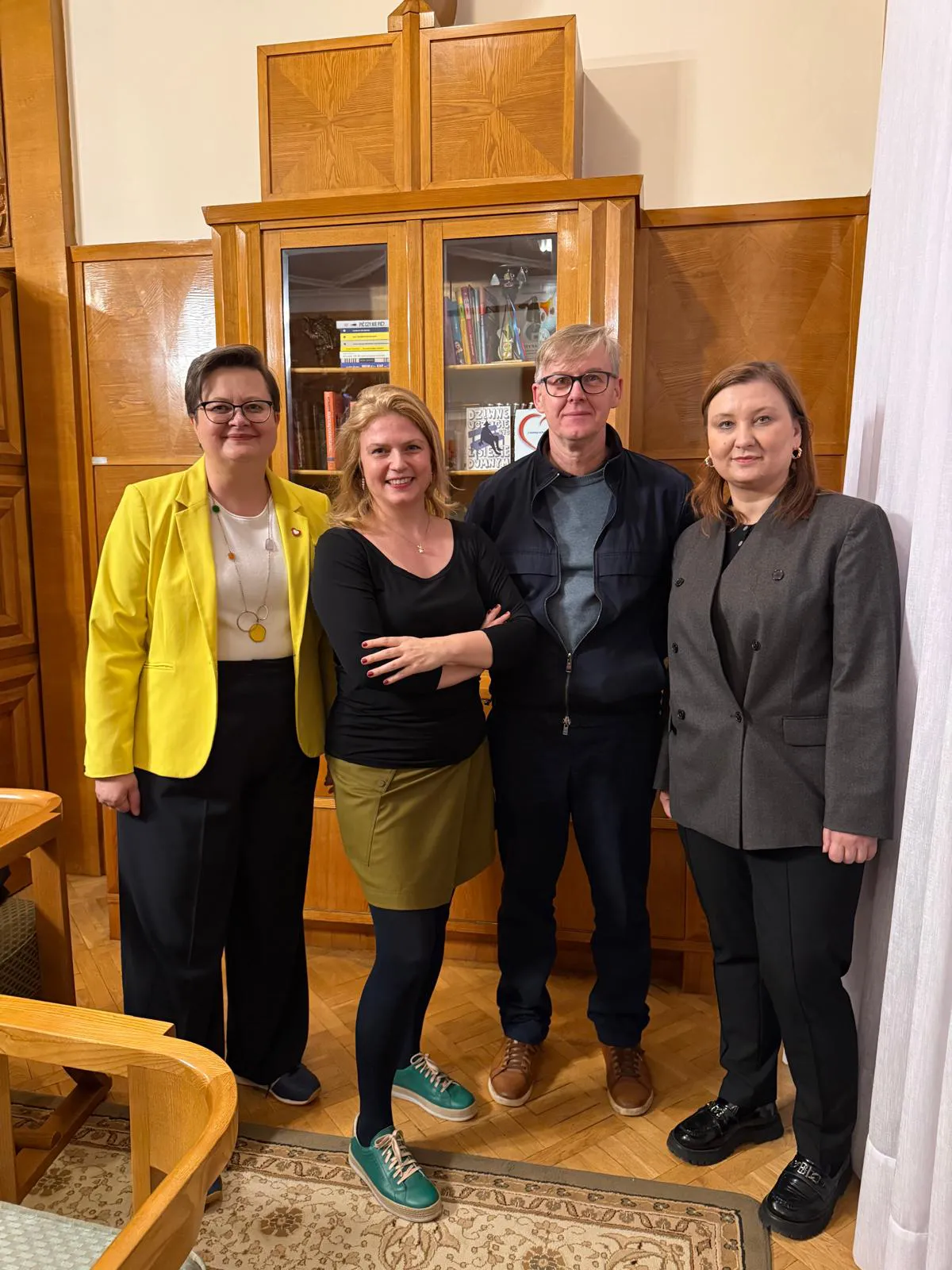
I am referring to a private and highly substantive conversation in the office of the Minister of National Education, Barbara Nowacka, accompanied by Katarzyna Lubnauer, Secretary of State, and Paulina Piechna-Więckiewicz, Undersecretary of State.
Where Tradition Meets Innovation
Before we moved on to discussing megatrends and digital transformation, the very context of the place reminded us of the importance of institutional continuity. The historic building of the Ministry of National Education took us back to the atmosphere of the 1920s and 1930s, when it was built for the then Ministry of Religious Affairs and Public Education.
Constructed in just three years, between 1927 and 1930, in the neoclassical style and with unique Art Deco interiors, the building survived the Second World War almost untouched. To this day, we can still admire its authentic architectural craftsmanship and the vision of its designers.
Yet the real essence of the evening was an open, dynamic discussion in the Minister’s office. The warm welcome from the Ministry’s leadership created space for a debate on issues of fundamental importance for the future talent base of the Polish economy. From the perspective of Booster of Innovation, two systemic programmes now being implemented deserve particular attention from business leaders.
1. AI Laboratories: Scaling Competences and Multi-Level Change Management
The first pillar of the government’s transformation strategy is the major AI Laboratories programme, being introduced in 12,000 Polish primary and secondary schools.
As experts in strategic consulting and change management, at Booster of Innovation, we assess technology projects not through the lens of purchased equipment, but through the level of technology adoption by people. In this respect, the Ministry’s project shows a rare degree of systemic maturity:
Scale:
The programme includes comprehensive training for up to 100,000 teachers.
Structure:
The training architecture has been divided into three precise levels of advancement: basic, intermediate and advanced.
This is a textbook example of a broad change management process. Without properly preparing the teaching staff, technology in schools remains lifeless. Investment in teachers’ competencies is the key to successful generational digital transformation. In the coming years, it may bring the first digital natives into the labour market who can genuinely collaborate with algorithms.
2. KOMPAS Jutra: A Response to the Soft Skills Gap
The second key topic of our conversation was the KOMPAS Jutra project, whose pilot programme will start in schools in September 2026, before becoming a compulsory subject from September 2027.
This is a strategic response to the rapidly changing reality of the labour market and the Future of Work. The programme focuses on developing soft and social skills, as well as the unique ability to work in distributed teams. It is based on cross-class synergy and combines areas which, until now, have often operated separately in Polish schools:
Philosophy and critical thinking,
Economics and personal finance,
Culture and media,
Climate and security.
The Booster of Innovation Perspective: The Road to Global Advantage
As a consulting brand that designs growth strategies and digital transformation for businesses on a daily basis, we look at this complementary and holistic approach to education with great enthusiasm.
In the age of automation, technical knowledge alone is losing value fast. Only the correlation of two vectors – advanced education in AI combined with a strong focus on critical thinking, interdisciplinarity and social competences, exactly as we define it in our HomoTech Leader model – can build a lasting competitive advantage for the young generation of Poles on the global labour market.
We closed this intense evening, full of strategic conclusions, with a cultural accent: a pre-premiere performance of selected scenes from W. A. Mozart’s “The Marriage of Figaro” at the stunning Royal Theatre in the Royal Łazienki Museum. It was an exceptionally inspiring Saturday in May, proving that great visions of the future need solid humanistic foundations.
Join the Discussion
From the perspective of business leaders, how do you assess the direction of change in Polish public education? Do you think programmes such as AI Laboratories and KOMPAS Jutra will adequately prepare future talent for the challenges of a fast-changing labour market? Which competences are most lacking today among young talents entering your organisations?
I invite you to join the discussion in the comments below the article.
Would you like to learn how to translate educational and technological megatrends into a talent development strategy, or Learning & Development, for your company?




0 Comments