

When we think about the sectors driving the Polish economy and building its position internationally, we usually point to tech, automotive or logistics. Yet there is one sector – not obvious to many – that has quietly and highly effectively dominated the European market, becoming a powerful production and export hub.
I am referring to the fish processing sector, where Poland is an undisputed leader, supplying European tables with top-quality salmon, mackerel and herring. In terms of both processing volume and value, this industry ranks third in Europe, setting standards for the entire continent.
From Macroeconomic Vision to Market Reality
During the recent Impact ’26 conference, Minister of Finance Andrzej Domański outlined a bold, long-term vision: for Poland to become the third-most-influential and developed economy in Europe. For many observers of the political and economic scene, this goal sounded extremely ambitious.
However, when we analyse the growth dynamics of Polish fish processing, it becomes clear that this vision is not merely a wishful manifesto. It is already taking shape before our eyes. This sector demonstrates that Polish businesses have a unique operational capability to compete, scale, and take a leadership position in international markets.
The growth dynamics of these companies are impressive. However, to maintain such a strong position in the face of rising labour costs, regulatory pressure, and the transformation of the supply chain, the sector now needs a new technological lever. That lever is Artificial Intelligence.
From Inspiration to Hard Strategy: Executive AI Workshops
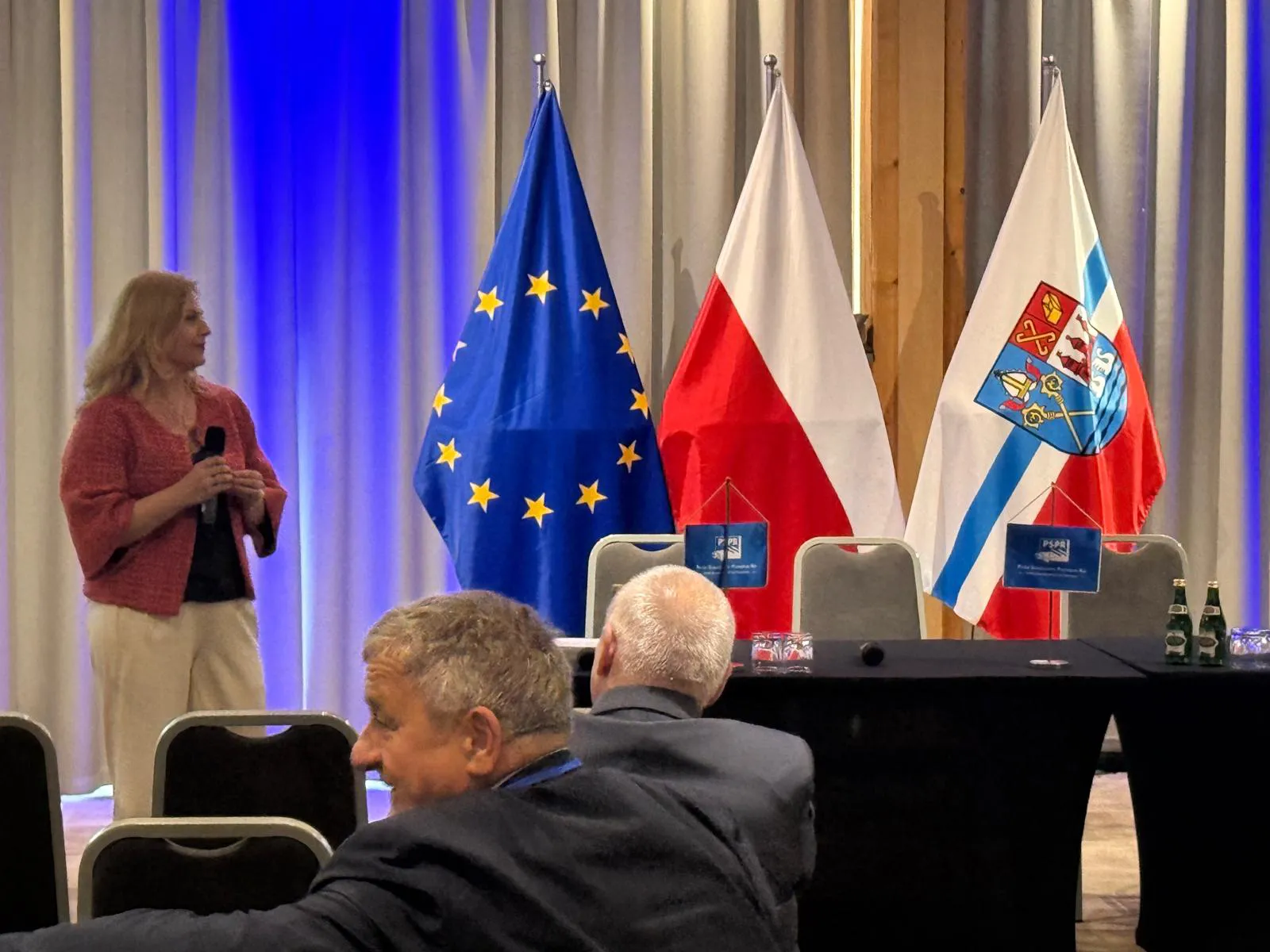
The presence of the Booster of Innovation at the flagship conference of the fish processing sector responds to a real and urgent need among the leaders of this market.
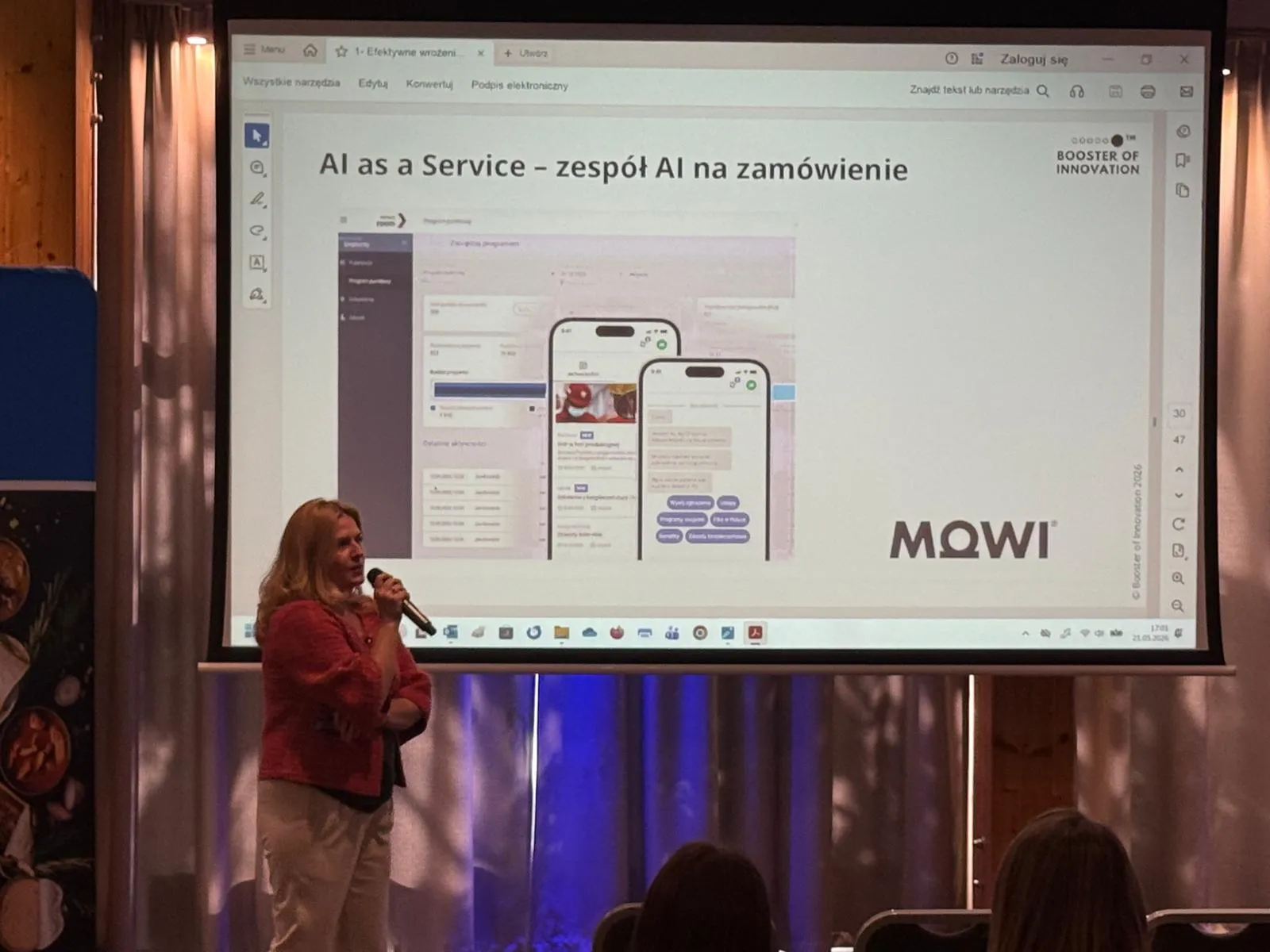
On the first day, I had the pleasure of delivering a keynote speech: “How to Adopt AI Effectively in Companies.” I focused on demystifying the technology and presenting Artificial Intelligence not as an innovative gadget, but as strategic engineering of business processes.
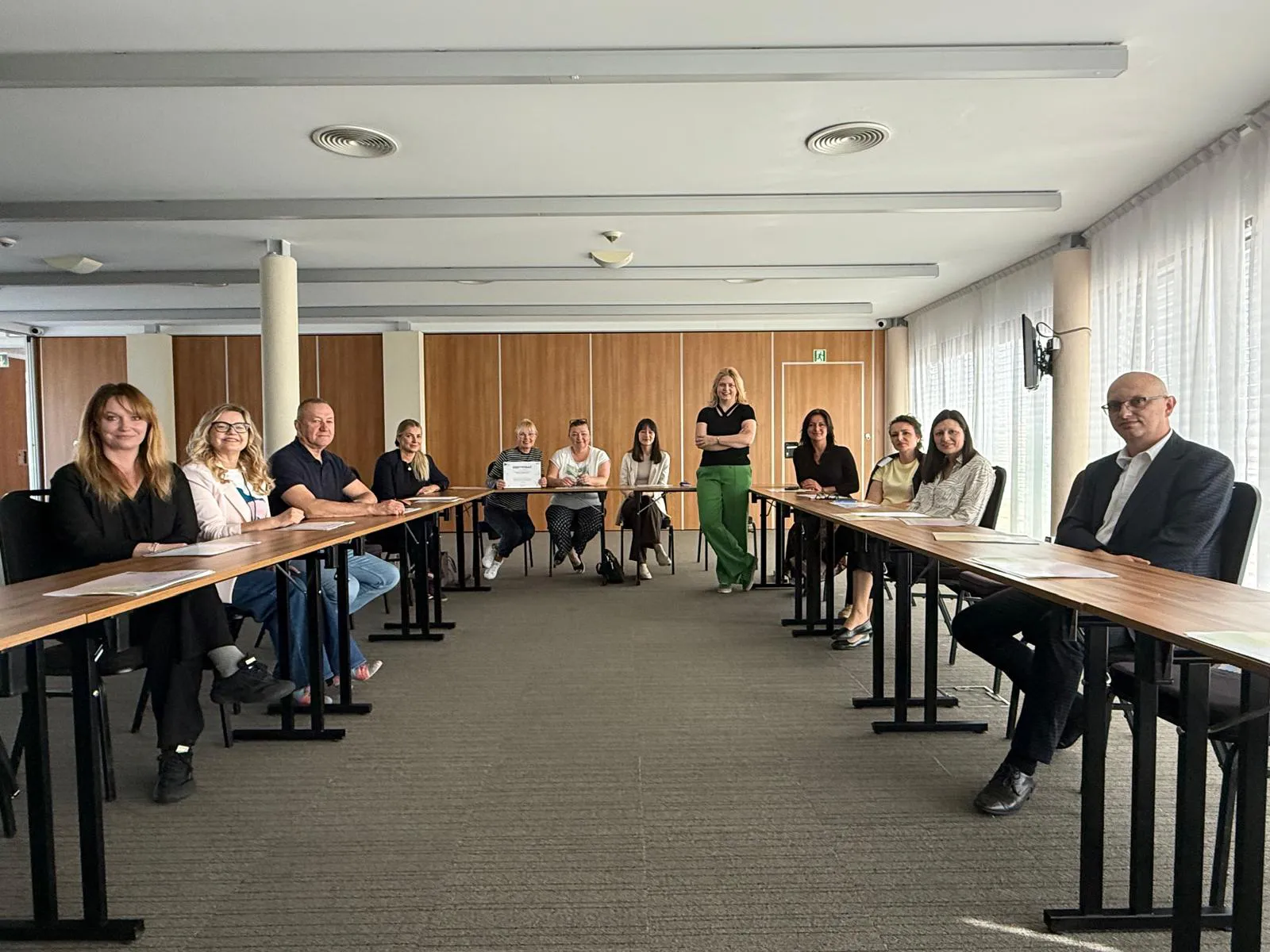
The second day was devoted to hard practice and closed strategic AI workshops for management boards and business owners whose companies are achieving spectacular cross-border success. In the world of mature premium business, there is no room for improvisation. That is why, during interactive work with supervisory boards and CEOs, I use Booster of Innovation’s original diagnostic and implementation tools.
Our frameworks, including the 4A Model and the AI Mindset Matrix, enable organisations with large-scale operations to:
Precisely map so-called low-hanging fruit – areas where AI can deliver an immediate return on investment, for example, in raw material optimisation, demand prediction or compliance automation.
Effectively avoid critical, costly implementation mistakes that companies often encounter during rapid digital transformation.
The Baltic Sea as a Symbol of Constant Transformation
Working with leaders of this sector in a coastal landscape, it is hard not to reflect on the symbolism of the Baltic Sea itself. The sea is not only the natural base and heart of the processing industry. Above all, it is a symbol of the geopolitical and economic change in the role of the entire Central and Eastern European region.
From a historical and geographical perspective, there is a fascinating fact hidden here: the Baltic Sea was not always a sea. In its geological past, it was a vast freshwater lake. We must admit, for a lake, it was rather impressive.
Just as that former freshwater lake was transformed by planetary processes into a key maritime area connecting markets, traditional sectors of the economy – under the wave of Artificial Intelligence – must also undergo a deep evolution.
Summary: The Future Belongs to HomoTech in Every Industry
The success of Polish fish processing proves that mature leadership, courage in international expansion and operational flexibility can work wonders. Adding AI technology to this equation will allow these companies not only to maintain their No. 3 position in Europe, but also to genuinely compete for a place on the global podium.
At Booster of Innovation, we believe that every industry – no matter how rooted in physical products – ultimately becomes a technology industry. The winners will be those who first combine traditional operational craftsmanship with the power of algorithms.
Join the Discussion
Which sectors of the Polish economy, in your opinion, have the greatest potential to repeat the global success of fish processing and help move Poland into the Top 3 economies in Europe? Are your organisations already using AI to optimise traditional production and logistics processes?
Let’s discuss it in the comments.
Would you like to implement Booster of Innovation’s original advisory frameworks and organise a dedicated strategic AI workshop for your company’s Management Board?




0 Comments