

Traditional strategic forecasting no longer serves today’s world. For years, organisations relied on external experts to deliver stylish trend reports and scenario-planning documents. These often ended up forgotten on shared drives. They looked impressive but remained disconnected from the daily business decisions that matter.
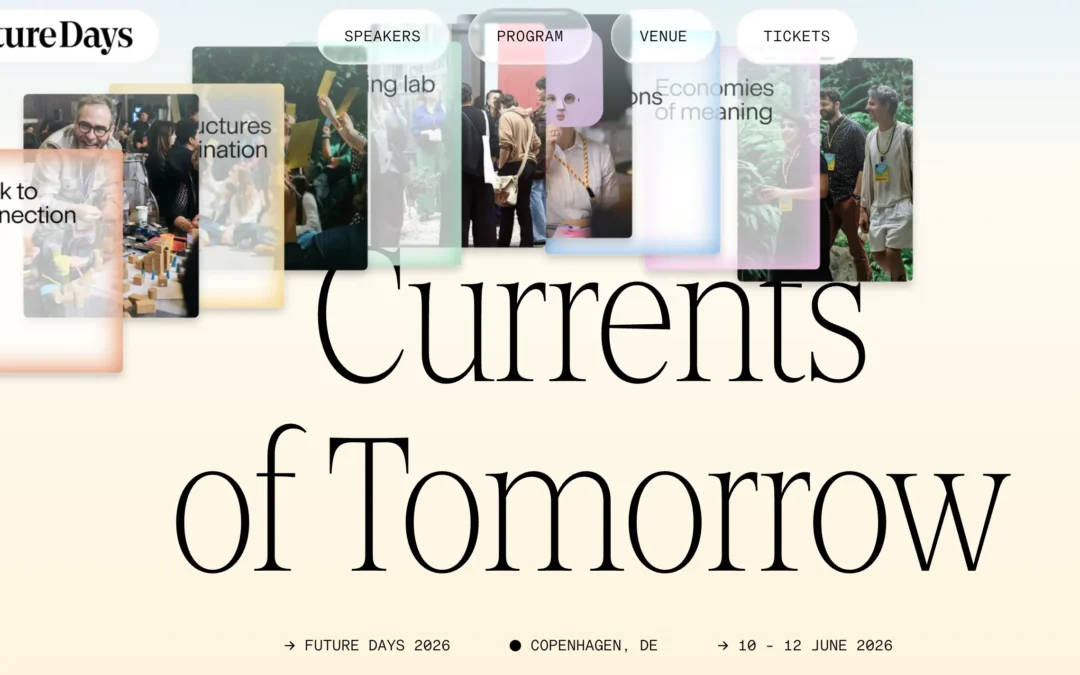
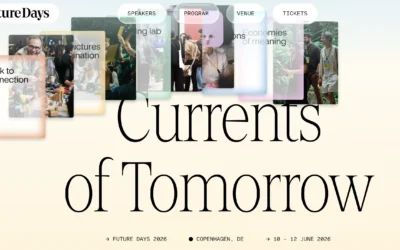
The recently concluded Future Days 2026 conference in Copenhagen sent a clear message: the time has come for a fundamental shift in thinking. We are moving away from predicting the future and towards practising it together.
For boards and business leaders in an age of constant change, the key argument is that foresight must be integrated as a central, operational capability. The real question now is how to make this practical in daily decisions.
The End of the “Safety Cushion”: The Illusion of Precise Forecasting
Most senior leaders know the world is too complex to predict exactly. Yet, corporate structures still act as if the right model could remove all future risk.
This year’s Future Days theme – Currents of Tomorrow – challenged this thinking. Instead of viewing the future as a linear path extended by data, we must navigate intersecting currents.
- Technological currents. Hyperautomation, the evolution of AI and the deep datafication of business processes.
- Environmental currents. Climate risks, water resource management and blue-green infrastructure.
- Social currents. Polarisation, the crisis of institutional trust and major demographic shifts.
- Institutional currents. New regulatory frameworks, compliance requirements and modern economic instruments.
In a volatile world, traditional prediction shifts to strategic positioning. Leaders should now ask: Where are we positioned? Are we shaping currents at the source, moving with the flow, or simply absorbing impact further downstream?
The Future as a Team Practice
One of the strongest signals from Copenhagen was the democratisation of foresight. The analysis of the future can no longer remain locked inside an analytical silo. The most effective organisations are now adopting the following model:
- Foresight becomes a shared language. It connects strategy, design, business, HR, technology and operations.
- The expert’s role is changing. Their job is not to deliver a ready-made ‘truth about the future.’ Instead, they build tools and routines that help everyone think ahead.
- Front-line employees become detectors of change. Those closest to customers and the market become co-creators of strategy by identifying and sharing so-called weak signals of change.
In practice, this means shifting from annual, surface-level strategy workshops to ongoing routines. Use team-based future panels or regularly updated signal maps by cross-functional teams. Strategy is no longer imposed from above but developed together.
We no longer move simply from point A to B, although past education and experience rewarded that thinking. Now, it is vital to see the whole alphabet, navigate between letters, and choose those that shape our future currents.
The Future Is Already on the Street
Copenhagen demonstrated that business leaders must leave the conference room to experience innovation in the real world. As part of the conference experiments, participants entered the urban environment to explore the concept of Sensing the City.
Why? Because of the AI revolution, climate resilience and changing consumer behaviour become visible on city streets long before they appear in quarterly reports or Excel spreadsheets.
Watching how different groups use public spaces, adopt technology, and where tensions emerge helps leaders spot trends early. If your strategy never leaves the office, you may miss the scenarios unfolding outside.
A New Strategic Choreography: Sensing > Converging > Integrating
To manage this complexity, modern leadership must adopt a new three-stage operating framework:
Sensing > Converging > Integrating
- Sensing.
Widen your organisation’s radar. Gather data, stories, and market experiences without rushing decisions.
- Converging.
Create shared meaning. Connect scattered signals into currents, define tensions, and map risks.
- Integrating.
Translate insights into business actions. Launch innovation portfolios, pilot projects, invest capital, and build new skills.
How Does Booster of Innovation Turn Future Currents into Your Competitive Advantage?
At Booster of Innovation, we believe successful organisations turn global, chaotic market signals into clear business opportunities. Our response to the challenges highlighted in Copenhagen is our proprietary research and advisory format, Future Briefing, which has been part of Booster’s DNA since the very beginning.
Our Future Briefing is not just a theoretical trends report. It is a strategic tool for boards and innovation directors. It maps technological and market currents unique to your industry. Identifies gaps and new revenue niches before your competitors notice them. Provides a ready-to-use framework for implementation within your organisation, based on the Sensing > Converging > Integrating methodology.
As a result, you gain a dynamic map that clearly outlines how your company can both adapt to future changes and actively influence what comes next.
What Comes Next?
Key takeaways: Embrace continuous foresight, engage all levels of your organisation, and practice strategic adaptation to turn emerging signals into real business advantages.
In the next article, we will take a closer look at a particularly important question: How can an organisation or transformation programme become a living laboratory of the future – a Living Lab – instead of relying on one-off bursts of project activity?
Join the Discussion
Take the next step: How does your organisation currently approach trend analysis? Is it still relying on static reports, or are you introducing team-level routines to actively map the future? Challenge your status quo and share what works.
Contribute your experiences and insights-join the conversation and help shape how organisations embrace the future.
Let’s Meet
Reach out today to learn how a Future Briefing Report can transform your strategic direction. Connect with us to discover how we partner with companies and the impact our analyses bring.


0 Comments